Table of Contents >> Show >> Hide
- What does “built a home from” even mean?
- 10 Unusual Things People Built Homes From
- 10) An old airport
- 9) Sets from The Phantom Menace
- 8) “Trash” (aka whatever was available)
- 7) A gun emplacement in the middle of the ocean
- 6) A mountainside
- 5) An entire fleet of ships
- 4) Cliff crevices
- 3) A lakebed
- 2) A nuclear missile silo
- 1) Floating oil platforms
- What these unusual homes teach us (besides “humans will live anywhere”)
- Bonus: of real-world “experience” insights (what you’d notice if you lived in one)
- Conclusion
Home is supposed to be four walls, a roof, and maybe a neighbor who “accidentally” mows two inches onto your lawn. But humans are delightfully uncoachable. Give us a leftover structure, a weird landscape, or a piece of geopolitical chaos, and we’ll say, “Yepthis can be a living room.”
This article explores ten wildly unusual “ingredients” people have used as the starting point for a homesome born from creativity, some from necessity, and some from the kind of decision-making that happens when the alternative is “no shelter at all.” Along the way, we’ll dig into why these choices work (sometimes), what they cost you in comfort and safety, and what they teach us about building smarter, more resilient housing.
What does “built a home from” even mean?
In this context, “built from” isn’t only about materials like wood or brick. It’s about turning an unlikely base into a place to liveby reusing, inhabiting, or adapting something that was never meant to be home. Think of it as architectural repurposing with a side of “Wait… people LIVE there?”
Each of the ten examples below begins with something unconventional: a former airport, a movie set, a fortress in the ocean, ships stuck in a canal, a cliff, a lakebed, and even offshore oil platforms. You’ll see a theme repeating (without repeating the sentences): humans will domesticate anything if it has enough flat surfaces to put a kettle on.
10 Unusual Things People Built Homes From
10) An old airport
Airports are built for flow: runway lines, hangars, service roads, open space. So when an airport closes, it leaves behind a ready-made layout that’s oddly friendly to development. In places like Bar Nunn, Wyoming, the former airfield footprint influenced how streets and lots took shapeturning the geometry of aviation into everyday suburbia.[2]
Why it works
- Existing infrastructure: roads, utility corridors, and large open areas can reduce early development friction.
- Clear, organized layout: former runways and taxiways often translate into long, straight streets.
What to watch
- Soil and contamination: aviation fuel and maintenance chemicals can leave a legacy that requires remediation.
- Wind exposure: open, flat fields can be brutal in winter unless landscaping and windbreaks are planned.
9) Sets from The Phantom Menace
Movie sets are basically temporary architecture wearing a convincing costume. Usually they’re dismantled after filming. But sometimes a set sticks around long enough to become usefullike the Mos Espa set built for Star Wars: Episode I in Tunisia, which has been reported as an improvised settlement and a way for locals to earn income by selling set remnants to tourists.[3]
Why it works
- It already resembles a “town”: even simplified set structures suggest streets, courtyards, and shelter zones.
- Tourism gravity: recognizable pop culture sites can create a tiny economy in the middle of nowhere.
What to watch
- Not engineered for long-term living: sets prioritize camera angles, not insulation, plumbing, or durability.
- Legal and ethical gray areas: who owns a set after filmingespecially when locals need housing?
8) “Trash” (aka whatever was available)
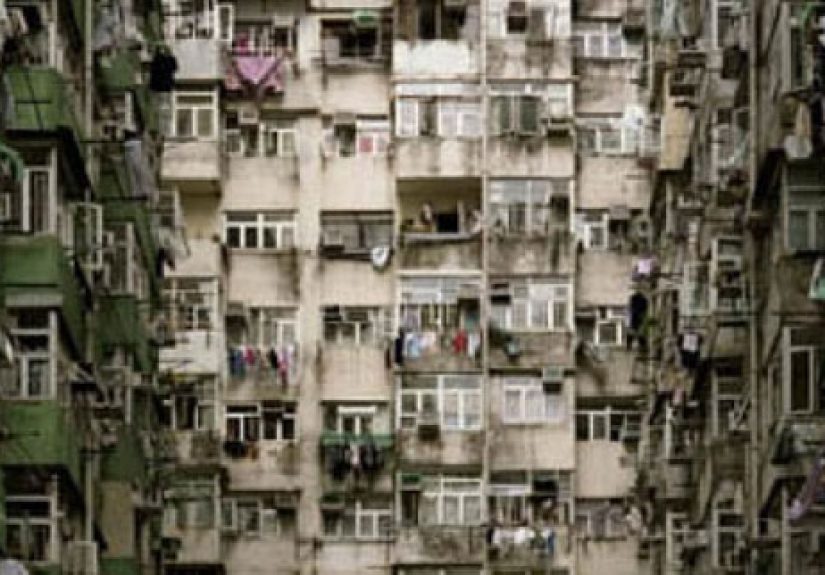
When formal housing is inaccessible, people build with what they can find. The most famous cautionary tale is Hong Kong’s Kowloon Walled City, a dense, largely unregulated cluster of buildings that evolved rapidly in a jurisdictional gray zone. It’s been described as a “city of darkness” because its extreme density created narrow corridors and limited lightan intense example of how informal construction can scale into an entire urban ecosystem.[4]
Why it works (in the short term)
- Speed: scavenged and low-cost materials enable rapid shelter creation.
- Community adaptation: informal systems emergemicro-businesses, mutual aid, shared utilities.
What to watch
- Safety risks: fire hazards, structural instability, and poor ventilation can be devastating.
- Health outcomes: crowded conditions and limited sanitation can produce long-term harm.
7) A gun emplacement in the middle of the ocean
Some structures are built to defend borders; others are built to test the limits of human audacity. Sealandfamously claimed as a micronationbegan as HM Fort Roughs, a World War II-era sea fort. In the late 1960s, Roy Bates occupied it with ambitions that included pirate radio, then declared it a “principality.” Whether or not you consider it a country, it’s undeniably a home built from a military platform sitting in the sea.[5]
Why it works
- It’s already habitable-ish: enclosed spaces, high platforms, and a structure designed to resist harsh conditions.
- Isolation by default: for some people, distance from land is the whole point.
What to watch
- Maintenance is constant: saltwater corrosion treats steel like a snack.
- Logistics: every gallon of water, every bolt, every grocery item arrives the hard way.
6) A mountainside
Cliffside construction isn’t newhumans have carved and attached shelters to rock for centuries. One headline-grabbing example is China’s Hanging Temple (Xuankong Si), a monastery complex associated with cliffside building techniques and long-term endurance. Built to achieve isolation and spiritual focus, it’s a reminder that “peace and quiet” has historically motivated people to choose locations that would terrify a home inspector.[1]
Why it works
- Natural protection: rock overhangs can shield buildings from wind and precipitation.
- Temperature moderation: mountains and stone can buffer temperature swings.
What to watch
- Access: every repair, renovation, or emergency response is harder on a cliff.
- Rockfall and erosion: geology changes on its own schedule, not yours.
5) An entire fleet of ships
When the Suez Canal closed after the Six-Day War, multiple ships ended up stranded for years in the Great Bitter Lake. Rather than treating it as an eight-year waiting room, crews formed a cooperative communitycomplete with shared activities, social organization, and even events like Olympic-style competitions. It’s one of the most literal examples of building “home” from circumstances: the ships became a floating neighborhood, and boredom became a municipal planner.[7]
Why it works
- Ships are self-contained: they’re built for crews, storage, and living quarters.
- Human routine is powerful: even temporary societies stabilize when people divide roles and build rituals.
What to watch
- Long-term wear: ships not sailing still degradeespecially in heat, sand, and stagnant water.
- Mental health: isolation and uncertainty can be tougher than the logistics.
4) Cliff crevices
Setenil de las Bodegas in Spain is famous for homes and businesses tucked beneath enormous rock overhangs, with streets that look like someone slid a village under a boulder and called it “cozy.” The rock isn’t just sceneryit functions like a natural roof, shading buildings and helping moderate temperatures. It’s a clever use of geology as architecture: the cliff does part of the job your HVAC system wishes it could do.[1]
Why it works
- Natural insulation and shade: rock reduces heat exposure and can stabilize indoor temperature.
- Space efficiency: building into existing forms can conserve materials and footprint.
What to watch
- Moisture management: rock and enclosed spaces can trap dampness without ventilation.
- Geological risk perception: even if the rock is stable, living under it can feel… emotionally loud.
3) A lakebed
Mexico City’s modern footprint sits largely on what used to be Lake Texcoco and surrounding lake systems. Building on former lakebed sediments can amplify earthquake shaking, and long-term groundwater extraction contributes to subsidencemeaning the ground itself can compress and sink over time. It’s a striking example of how a city can be “built from” a landscape choice that keeps charging interest for centuries.[8]
Why it works
- Flat land is tempting: lakebeds are wide, buildable, and strategically located.
- Early expansion logic: draining water to gain land often seemed like progress in older engineering playbooks.
What to watch
- Seismic amplification: soft, waterlogged soils can make shaking feel stronger and last longer.
- Infrastructure strain: uneven sinking stresses roads, pipes, and building foundations.
2) A nuclear missile silo
Cold War missile silos were engineered for security, not charmbut charm is optional when your selling point is “steel-and-concrete fortress.” In the U.S., multiple silos have been converted into private residences and high-end “survival condos,” leveraging the silo’s underground structure, blast-resistant design, and isolation. These projects often add modern living spaces, filtration systems, and amenities that make the apocalypse feel… uncomfortably like a luxury spa weekend.[9]
Why it works
- Extreme durability: thick concrete and subterranean placement provide natural protection from weather and temperature swings.
- Privacy: there’s no “drive-by curiosity” when your home is mostly underground.
What to watch
- Ventilation and moisture: underground spaces require careful engineering to avoid mold and air quality issues.
- Psychology of living underground: windowless living isn’t for everyoneseasonal affective disorder doesn’t care about your reinforced doors.
1) Floating oil platforms
Neft Daşları (“Oil Rocks”) off Azerbaijan is often cited as a sprawling offshore settlementeffectively a town built atop and between oil platforms and causeways. It’s industrial housing scaled to the size of a community, created for workers and operations far from shore. Whether you frame it as a “city on the sea” or a very committed worksite, it’s an unforgettable example of humans building homes from infrastructure intended for extraction, not domestic life.[10]
Why it works
- Proximity to work: if the job is offshore, the housing goes offshore too.
- Modular expansion: platforms and connected walkways allow a settlement to grow in segments.
What to watch
- Harsh environment: wind, salt, storms, and corrosion make maintenance relentless.
- Dependency: power, food, supplies, and medical response depend on steady logistics.
What these unusual homes teach us (besides “humans will live anywhere”)
These ten examples range from whimsical to sobering, but they share a few practical lessons that apply to mainstream housing too:
- Adaptive reuse can be powerful: reusing structures can cut costs and materialsif safety and zoning cooperate.
- Geography is part of the design: cliffs, rock, water, and soil conditions don’t care about your Pinterest board.
- Community is infrastructure: when people are isolated (ships, platforms, enclaves), social systems become as important as plumbing.
- Durability is a lifestyle: offshore living, underground living, and cliffside living all require ongoing maintenance and contingency planning.
Bonus: of real-world “experience” insights (what you’d notice if you lived in one)
Even if you never plan to move into a missile silo (no judgmentyour HOA can’t fine you if it can’t find you), these homes are a masterclass in how environment shapes daily life.
First, sound changes. In repurposed structures like former hangars or underground spaces, noise behaves differently. A big open shell can amplify echoes, while thick earth and concrete can swallow sound so completely that a normal conversation feels like whispering in a library. That quiet can be calminguntil it feels like the building is holding its breath. People often compensate by adding soft materials, rugs, acoustic panels, or even just more “stuff,” because nothing says “cozy” like defeating your own bunker’s acoustics with throw pillows.
Second, light becomes emotional. Cliffside and rock-overhang towns get natural shade that can make hot climates more comfortable, but it also changes your sense of time. In underground conversions, lighting isn’t just décorit’s your circadian rhythm manager. The most successful designs treat lighting like a health system: layered, adjustable, and bright enough during “day” hours to keep your body convinced the sun still exists.
Third, weather isn’t a background featureit’s an appointment. Offshore platforms and sea forts make you hyper-aware of wind, fog, salt spray, and storms. You don’t “check the weather” for curiosity; you check it because it controls whether supplies arrive, whether repairs are possible, and how much the whole structure will sway and groan. The upside is that you develop real respect for maintenance. The downside is that every storm feels like your landlord is a planet.
Fourth, you become a systems thinker. On ships or isolated structures, you learn quickly that everything is a system: water storage, waste, power, food, air. People who thrive in these spaces tend to enjoy routinesinventory checks, filter replacements, planned repairs. If you’re the type who forgets to change the smoke detector battery for three years, an unconventional home will not magically make you responsible. It will, however, provide consequences with impressive speed.
Fifth, community can be the difference between “quirky” and “unlivable.” The Yellow Fleet worked as a livable “place” because crews created shared culture and mutual support. Informal settlements persist because people cooperate, trade, and help. The structure mattersbut the social glue matters more. In weird housing, your neighbors aren’t just neighbors; they’re your supply chain, your emergency plan, and sometimes your entertainment committee.
In other words: unusual homes don’t only test engineering. They test habits, psychology, and the ability to treat daily life as a set of solvable problems. And honestly, that’s not a bad definition of adulthood.
Conclusion
From airports to oil platforms, these homes prove that “shelter” is as much imagination as it is materials. Some of these adaptations are clever and sustainable. Others are warnings about what happens when housing supply, governance, or safety systems fail. Either way, they’re a reminder that the built world is never fixed: humans keep remixing itsometimes with brilliance, sometimes with duct tape, and occasionally with both.