Table of Contents >> Show >> Hide
- Why People Add Milk (And Why You Don’t Need It)
- What You’ll Need
- How to Make Scrambled Eggs Without Milk: 13 Steps
- Step 1: Decide your texture goal (fluffy curds or soft custard)
- Step 2: Crack eggs into a bowl (not directly into the pan)
- Step 3: Add salt early (or at least not at the last second)
- Step 4: Choose your “no-milk boost” (optional, but useful)
- Step 5: Whisk like you mean it (but don’t create a foam party)
- Step 6: Preheat the skillet gently
- Step 7: Add your fat (butter, oil, or dairy-free butter)
- Step 8: Pour in eggs and wait 5 seconds
- Step 9: Stir with intention (your spatula is the boss now)
- Step 10: Control the heat (the “off-heat” trick is your secret weapon)
- Step 11: Stop when eggs look slightly underdone
- Step 12: Finish with seasoning and extras
- Step 13: Serve immediately (scrambled eggs don’t do well on “hold”)
- Two Popular No-Milk Styles (Pick One and Own It)
- Troubleshooting: Fix Common Scrambled Egg Problems
- Food Safety & Storage (Because Eggs Are Not a “Guessing Game”)
- Delicious Add-Ons That Still Keep It Milk-Free
- Conclusion: Milk-Free Scrambled Eggs Are a Skill, Not a Sacrifice
- Experiences Related to “How to Make Scrambled Eggs Without Milk: 13 Steps” (About )
Milk in scrambled eggs is kind of like putting a tiny hat on a dog: it’s optional, sometimes cute, and absolutely not required for success.
If you’re out of milk, avoiding dairy, or just tired of recipes acting like your eggs will collapse emotionally without a splash of moo-juice,
you’re in the right kitchen.
This guide walks you through a reliable, no-milk method that still delivers tender, fluffy curds (or soft, custardy eggsyour call).
You’ll get a clear 13-step process, plus pro-level tips for texture, seasoning, and avoiding the dreaded “rubbery breakfast sponge.”
Why People Add Milk (And Why You Don’t Need It)
People add milk for three main reasons: (1) they think it makes eggs fluffy, (2) they think it makes eggs creamy, or (3) they saw someone do it once
and decided it was “the law.” In reality, the best scrambled eggs are mostly about technique: gentle heat, smart stirring, and pulling the eggs
before they overcook.
If you want extra fluff without milk, a small splash of water can help by creating a little steam. If you want richness without milk,
you can rely on fat (butter, olive oil, or dairy-free butter) and proper heat control. And if you want to impress someone,
you can casually say “I’m managing protein coagulation” while you cook. (Optional, but powerful.)
What You’ll Need
Ingredients (Basic)
- 2 to 4 large eggs
- Salt (fine salt is easiest to distribute)
- Black pepper (optional, but encouraged)
- 1 to 2 teaspoons butter, olive oil, or dairy-free butter
Optional Add-Ins (Choose Your Vibe)
- Water (for lighter, fluffier eggs)
- Mayonnaise (for creamy eggs without milk)
- Chopped chives, scallions, or parsley
- Grated cheese (skip if you’re fully dairy-free)
- Hot sauce, salsa, or chili crisp
Tools
- Nonstick skillet (8–10 inches is perfect for 2–4 eggs)
- Bowl
- Fork or whisk
- Flexible silicone spatula
- Plate (warm if you cancold plates steal heat and joy)
How to Make Scrambled Eggs Without Milk: 13 Steps
-
Step 1: Decide your texture goal (fluffy curds or soft custard)
Before you crack anything, pick a style:
Fluffy, bigger curds (classic diner-style) or soft, smaller curds (silky and spoonable).
Your stirring and heat will change depending on the texture you want. -
Step 2: Crack eggs into a bowl (not directly into the pan)
Cracking into a bowl helps you avoid shell surprises and makes whisking easier. Nobody wants “crunchy scrambled eggs.”
That’s not a chef’s special; that’s a kitchen mistake. -
Step 3: Add salt early (or at least not at the last second)
Salting your eggs while you whisk can help them season more evenly and may support a more tender texture.
If you’ve heard the myth that early salting makes eggs tough, don’t panicheat and overcooking are the bigger villains.Quick guide: For 2 large eggs, start with a small pinch (about 1/8 teaspoon). For 4 eggs, about 1/4 teaspoon.
You can always add more at the end. -
Step 4: Choose your “no-milk boost” (optional, but useful)
You don’t need any extra liquid. But if you want a specific outcome, pick one:
- For fluff: Add a small splash of water (about 1 to 2 teaspoons per egg). It creates steam and lightens the curds.
- For creaminess: Add about 1 teaspoon mayonnaise for every 2 eggs. Mayo is basically eggs + oil, so it plays nicely.
- For pure egg flavor: Add nothing. Let eggs be eggs. They’ve waited their whole life for this moment.
-
Step 5: Whisk like you mean it (but don’t create a foam party)
Whisk until the yolks and whites are fully combined and you don’t see streaks. This helps the eggs cook evenly.
You’re aiming for smooth consistency, not a meringue audition. -
Step 6: Preheat the skillet gently
Put your nonstick pan on low to medium-low heat. Scrambled eggs love patience.
High heat makes eggs seize quickly, which is how you end up with dry bits and regrets. -
Step 7: Add your fat (butter, oil, or dairy-free butter)
Add butter or oil and let it melt and lightly coat the surface. Butter gives classic flavor; olive oil gives a richer, savory edge.
Dairy-free butter works well toojust watch it, since some brands brown faster. -
Step 8: Pour in eggs and wait 5 seconds
Pour the eggs into the pan and give them a brief moment to warm before you start stirring.
This helps the bottom layer begin setting so you can form curds instead of making an egg smoothie. -
Step 9: Stir with intention (your spatula is the boss now)
Use a silicone spatula to push eggs from the edges toward the center, scraping the bottom gently.
Stirring controls curd size:- For larger, fluffy curds: Stir occasionally, letting curds form between stirs.
- For soft, custardy eggs: Stir slowly and almost constantly, keeping curds small.
-
Step 10: Control the heat (the “off-heat” trick is your secret weapon)
If the eggs start setting too fast, slide the pan off the heat for a few seconds while you stir, then return it.
Eggs keep cooking from residual heat, so this on/off approach prevents them from tightening up. -
Step 11: Stop when eggs look slightly underdone
Turn off the heat when the eggs are mostly set but still look a little glossy. They’ll finish cooking from carryover heat.
If you wait until they look “perfect” in the pan, they’ll be overcooked on the plate. -
Step 12: Finish with seasoning and extras
Taste and adjust salt, then add pepper, herbs, cheese (if using), or hot sauce.
If you’re adding delicate herbs (like chives), stir them in at the end so they stay bright and fresh. -
Step 13: Serve immediately (scrambled eggs don’t do well on “hold”)
Scrambled eggs are at their best right away. If they sit too long, they continue to firm up and lose moisture.
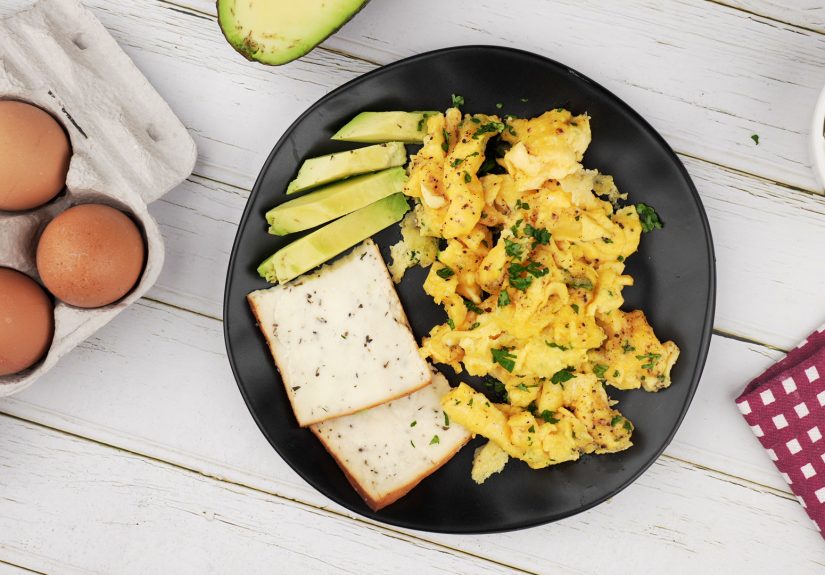
Plate them while they’re tender, then enjoy your milk-free victory lap.
Two Popular No-Milk Styles (Pick One and Own It)
Style A: Fluffy, Bigger Curds
- Heat: Medium-low to medium
- Stir: Occasional, gentle folding
- Optional add-in: A splash of water for lift
- Best for: Toast, breakfast sandwiches, meal prep burritos
Style B: Soft, Silky Curds
- Heat: Low
- Stir: Slow and frequent, scrape the pan continuously
- Optional add-in: Mayo for creaminess without milk
- Best for: Fancy brunch plates, avocado toast, “I cook” energy
Troubleshooting: Fix Common Scrambled Egg Problems
“My eggs are watery.”
- Cause: Too much added liquid, or eggs cooked too gently without evaporating moisture.
- Fix: Use less water (if adding it). Increase heat slightly and cook just long enough to thicken.
“My eggs are rubbery.”
- Cause: Too much heat or cooking too long.
- Fix: Lower the heat, stir more gently, and stop earlier. Let carryover finish the job.
“My eggs taste bland.”
- Cause: Not enough salt, or seasoning only at the very end.
- Fix: Salt while whisking, then taste and adjust after cooking. Add pepper, herbs, or a tiny hit of acid (hot sauce or salsa).
“My eggs stick to the pan.”
- Cause: Pan not nonstick, not enough fat, or heat too high.
- Fix: Use a nonstick skillet, coat with butter/oil, and keep heat low to medium-low.
Food Safety & Storage (Because Eggs Are Not a “Guessing Game”)
- Cook scrambled eggs until they’re set and not runny. If you use a thermometer, aim for 160°F for egg dishes.
- Refrigerate leftovers promptly (within 2 hours), and store in a sealed container.
- For best safety and quality, eat refrigerated leftovers within 3 to 4 days.
- Reheat leftovers until steaming hot; eggs can dry out, so reheat gently (microwave at lower power works well).
Delicious Add-Ons That Still Keep It Milk-Free
- Herb scramble: Chives + parsley + a pinch of garlic powder.
- Southwest: Salsa + cumin + chopped cilantro.
- Breakfast sandwich: Scrambled eggs + turkey bacon + tomato + arugula.
- Dairy-free “cheesy”: Nutritional yeast + a tiny squeeze of lemon + black pepper.
- Umami boost: A few drops of soy sauce or a pinch of MSG (yes, it’s allowed to taste good).
Conclusion: Milk-Free Scrambled Eggs Are a Skill, Not a Sacrifice
You don’t need milk for great scrambled eggsyou need control. Keep the heat gentle, whisk well, season smart, and stop cooking a little earlier
than your instincts tell you to. Whether you go fluffy or silky, your eggs can be tender, flavorful, and proudly milk-free.
And if anyone insists milk is required, offer them a forkful of your scramble. They’ll be too busy chewing to argue.
Experiences Related to “How to Make Scrambled Eggs Without Milk: 13 Steps” (About )
If you’ve ever tried making scrambled eggs without milk for the first time, the experience usually starts with a tiny panic:
“Wait… is this allowed?” You look at the eggs, you look at the fridge, you look back at the eggslike they’re going to file a complaint.
Then you cook them anyway, and the surprising part is how normal (and good) everything turns out.
A lot of home cooks discover the no-milk method on a weekday morning when time is tight and the cereal box is looking a little too confident.
The first batch often teaches one major lesson: heat matters more than ingredients. When the pan is too hot, the eggs set fast and end up
in that dry, bouncy zone that feels like chewing on a warm stress ball. But the next morning, you turn the heat down, stir a little more gently,
and suddenly the eggs are soft and tenderno milk required. It’s the same ingredients, different handling, better outcome.
Another common “aha” moment happens when someone adds a splash of water instead of milk and notices the curds get lighter.
It feels almost like a magic trick, except the magician is science and the rabbit is steam. The eggs puff slightly, the texture feels less heavy,
and the flavor stays more “egg-forward” instead of tasting diluted. That’s often when people stop treating milk as a sacred ingredient and start
treating it as an optional accessorylike sprinkles on a cupcake. Nice sometimes, but not required for joy.
For dairy-free eaters, no-milk scrambled eggs can be a confidence builder. Once you nail the technique with olive oil or dairy-free butter,
breakfast becomes less complicated: no special substitutions, no weird aftertaste, no “this is fine” face while you pretend you love it.
And if you’re cooking for a family with mixed preferences, it’s easy to keep the base recipe milk-free and let people customize.
One person adds cheese, another adds salsa, another adds hot sauce like they’re auditioning for a spicy-food documentary.
The most relatable experience, though, is the “I walked away for five seconds” lesson. Scrambled eggs can go from glossy and perfect
to overdone faster than your phone can load a weather app. Many cooks learn to turn off the heat early and let carryover finish the job.
The moment you master that timingwhen you plate eggs that still look slightly soft and they settle into creamy curdsyou feel like you’ve unlocked
a new breakfast level. Not because it’s fancy, but because it’s reliable. And reliability, at 7:12 a.m., is basically luxury.