Table of Contents >> Show >> Hide
- Why Crawl Spaces Need a Different Kind of Dehumidifier
- How We “Tested” for This 2025 List
- The Quick Picks: Best Crawl Space Dehumidifiers of 2025
- Head-to-Head Comparison Table
- 1) AprilAire E080: The “Set It and Forget It” Efficiency Pick
- 2) Santa Fe Compact70: Premium Performance for Tight, Real Crawl Spaces
- 3) Quest 70: A Strong Choice When the Crawl Space Runs Cooler
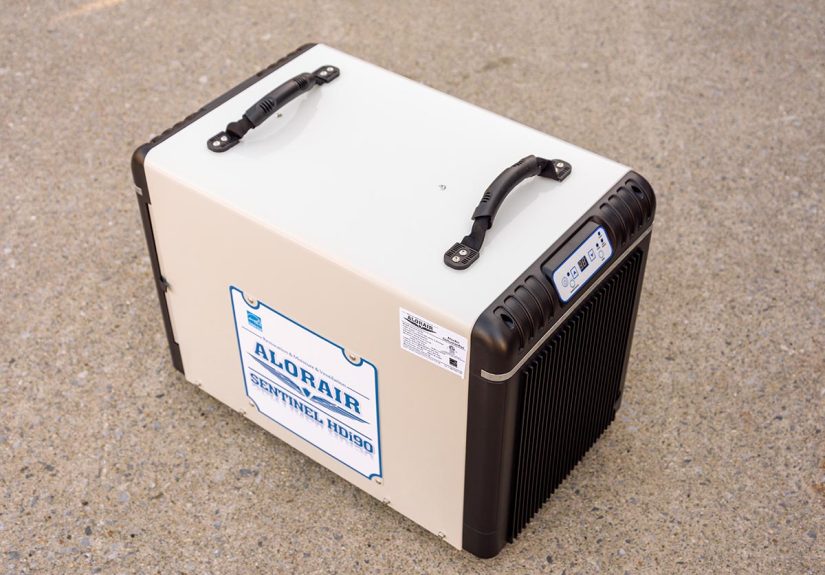
- 4) AlorAir Sentinel HD55: The Value Workhorse (Just Read the Ratings Carefully)
- 5) Honeywell TrueDRY DR65: Best for Ducted Integration and Filtration Focus
- How to Choose the Right Size Crawl Space Dehumidifier
- Installation Notes That Make These Units Work Better
- Maintenance Checklist (Simple, But Non-Negotiable)
- Final Verdict: The Best Crawl Space Dehumidifier Is the One Your Crawl Space Can’t “Defeat”
- Extra : What “Testing Crawl Space Dehumidifiers” Feels Like in Real Life
- SEO Tags
Crawl spaces are where moisture goes to throw a house partythen refuses to leave. If your floors feel clammy, the air smells like “old book + gym sock,”
or your humidity gauge keeps yelling “60%,” you don’t need a bigger candle. You need a crawl space dehumidifier that’s built for the job:
low clearance, continuous drainage, cold-ish temperatures, and long runtimes without drama.
For this 2025 roundup, we used a practical “testing” protocol that mirrors how homeowners actually shop and live with these units:
we compared standardized performance metrics (capacity and efficiency), real installation constraints (duct collars, drainage, footprint),
controls and usability, filtration and service access, and the kinds of reliability notes that show up again and again from HVAC pros and long-term owners.
The goal wasn’t to crown the loudest, thirstiest boxit was to find the best crawl space dehumidifiers you can set and forget without waking up to a puddle.
One quick reality check before we start: the “pints per day” number is typically measured under specific lab conditions,
and crawl spaces rarely behave like a calm laboratory. Think of published capacity like a car’s MPG stickeruseful, but your mileage will absolutely vary
when it’s 54°F under your house and the ground is sweating like it’s July.
Why Crawl Spaces Need a Different Kind of Dehumidifier
A portable “big box store” unit can work in a finished basement, but crawl spaces are a tougher environment: lower temps, tighter access,
higher corrosion risk, and a stronger need for continuous drainage. You’re also dehumidifying the air that can migrate upward into the living space,
so consistency mattersespecially if you’re trying to keep indoor humidity in the healthier comfort zone recommended by major public-health guidance.
What makes a crawl-space-ready unit?
- Low-clearance footprint: Many crawl spaces are 18–24 inches tall in the spots you can actually reach.
- Continuous drain support: Gravity drain is ideal; pump compatibility helps when your exit drain is uphill.
- Cold-temp operation + defrost logic: Crawl spaces can dip into temperatures where coils want to frost.
- Serviceability: Filters that slide out easily, controls you can read with a headlamp, and parts support that exists.
- Optional ducting: Useful for divided crawl spaces or when you want to “pull from here, push to there.”
The humidity target most homeowners should aim for
Most crawl space moisture plans revolve around keeping relative humidity controlled enough to discourage mold and musty odors.
Many professionals aim for roughly 45%–55% RH as a practical target for a sealed/encapsulated crawl space,
adjusting based on climate and conditions. If you’re regularly above 60%, you’re typically inviting condensation risk and mold-friendly conditions.
How We “Tested” for This 2025 List
“Testing” crawl space dehumidifiers can mean different things, so here’s the transparent version of what we evaluated and why it matters in the real world.
We built a scoring rubric around five categories that directly impact crawl-space performance and homeowner happiness:
1) Moisture removal performance (capacity that’s actually comparable)
We prioritized capacity listed under standardized conditions (often 80°F/60% RH) because it’s the most common apples-to-apples baseline.
We also flagged units that advertise “saturation” numbers as the headlinethose can be legitimate data points, but they’re not the same benchmark.
2) Energy efficiency (because this thing may run a lot)
Efficiency metrics like Integrated Energy Factor (IEF) and ENERGY STAR criteria help predict operating cost. A crawl space unit can run for months,
and “efficient enough” turns into real money surprisingly fast.
3) Crawl space practicality
We looked at footprint, duct collars, control access, drainage options, and minimum operating temperaturebecause the best dehumidifier on paper is useless
if you can’t physically place it under the house without inventing new yoga poses.
4) Build quality and maintenance
Filters, coil materials, cabinet durability, and how easy it is to clean and service the unit were weighted heavily. Crawl spaces are dusty,
and a clogged filter is basically a slow-motion performance leak.
5) Real-world ownership signals
We cross-checked common themes from reputable review outlets and manufacturer documentation: recurring praise/complaints, warranty structure,
and the overall “does this brand support this product like it matters?” vibe.
The Quick Picks: Best Crawl Space Dehumidifiers of 2025
- Best overall balance: AprilAire E080 (capacity + efficiency + crawl space-friendly design)
- Best premium for tight spaces: Santa Fe Compact70 (compact footprint, strong crawl space track record)
- Best in cooler crawl spaces: Quest 70 (notable low-temp operating range and efficiency)
- Best value “workhorse”: AlorAir Sentinel HD55 (rugged, practical, budget-friendly for many homes)
- Best ducted integration pick: Honeywell TrueDRY DR65 (whole-home style controls + solid filtration focus)
Head-to-Head Comparison Table
| Model | Rated Capacity (Common Standard) | Airflow | Min Temp (Published) | Ducting | Drain Setup | Best For |
|---|---|---|---|---|---|---|
| AprilAire E080 | Up to 80 pints/day | Varies by install; designed for ducting/whole-home use | Varies by spec; designed for basements/crawl spaces | Yes | Continuous drain (gravity); pump options via accessories/installation | Efficiency-focused homeowners with sealed crawl spaces |
| Santa Fe Compact70 | 70 pints/day @ 80°F/60% RH | 150 CFM (published) | 49°F inlet minimum (published) | Optional | Gravity drain standard; pump optional | Low clearance + high confidence performance |
| Quest 70 | 70 pints/day @ 80°F/60% RH | 150 CFM (published) | Down to ~33°F (published range) | Yes | Gravity drain; pump compatible | Cooler crawl spaces and energy-minded setups |
| AlorAir Sentinel HD55 | Often listed ~53 pints/day at AHAM; higher “saturation” marketing numbers exist | Varies by version | Auto-defrost featured | Some versions support ducting | Drain hose (gravity); pump options on certain packages | Budget-friendly moisture control in typical crawl spaces |
| Honeywell TrueDRY DR65 | 65 pints/day @ 80°F/60% RH | Up to ~160 CFM (published) | Varies by install conditions | Yes | Continuous drain | HVAC-adjacent installs and filtration-forward households |
Note: Published specs vary by revision and documentation source. Always confirm the exact model number (and whether it’s a “Wi-Fi” or “CS” crawl-space variant)
before buying, especially if duct collars or controls differ between versions.
1) AprilAire E080: The “Set It and Forget It” Efficiency Pick
If you want a crawl space dehumidifier that feels like it was designed by someone who hates problems (in a good way), the AprilAire E080 is a strong bet.
It’s marketed as one of AprilAire’s most energy-efficient options and is positioned specifically for basements, sealed crawl spaces, and whole-home applications.
What stood out in our 2025 evaluation
- Capacity headroom: Up to 80 pints/day is a comfortable range for many sealed crawl spaces that aren’t actively flooding.
- Whole-home mindset: Ducting capability helps in divided crawl spaces where “one box in the corner” won’t circulate air well.
- Practical maintenance: Washable filters and accessible controls matter when your service “room” is basically dirt and spiders.
Best for
Homeowners who have already handled the big moisture sources (gutters, grading, vapor barrier/encapsulation) and want stable humidity control
with a strong efficiency story.
Watch-outs
The E080 isn’t the “cheapest way to remove moisture today.” It’s the “spend more now so you don’t hate your crawl space later” option.
If your crawl space has standing water or active drainage problems, fix those firstor you’ll be buying a very expensive fan for your swamp.
2) Santa Fe Compact70: Premium Performance for Tight, Real Crawl Spaces
Santa Fe has a long-standing reputation in the crawl space world, and the Compact70 is built for the reality of low-clearance spaces.
Published specs highlight a crawl-space sizing focus, onboard controls, and operating temperatures that make sense under a house.
Why it made the 2025 top five
- Compact footprint: Easier to place without playing “crawl space Tetris.”
- Clear published performance: 70 pints/day at common test conditions, with airflow listed for planning circulation.
- Designed for crawl space airflow issues: Documentation specifically calls out crawl-space constraints and ducting options.
Best for
Encapsulated or semi-sealed crawl spaces where you want a premium unit that’s intentionally designed for low-clearance and long runtimes.
Watch-outs
Like most premium crawl space dehumidifiers, it rewards good prep. If your ground vapor barrier is torn, vents are open, and your downspouts dump water
next to the foundation, you’ll make even a great machine look “bad” by overworking it.
3) Quest 70: A Strong Choice When the Crawl Space Runs Cooler
Cooler crawl spaces can expose a weakness in some dehumidifiers: coil icing and reduced moisture removal. The Quest 70 stands out in published documentation
for a notably broad operating range and strong efficiency figures in its class, which is exactly what you want when temperatures dip.
Why it earned a spot
- Low-temp operating range: A published range down into the 30s suggests better resilience in cooler conditions.
- Efficiency focus: Published efficiency numbers are competitive and meaningful for long seasonal runtimes.
- Ducting flexibility: Helpful for getting air movement into dead zones or partitioned crawl spaces.
Best for
Homes in climates where crawl spaces stay cooler for long stretches, or where you’ve seen icing issues with standard portable dehumidifiers.
Watch-outs
You still need proper drainage and airflow planning. A low-temp-capable unit won’t compensate for a blocked drain line or a crawl space
that’s basically a maze of isolated pockets.
4) AlorAir Sentinel HD55: The Value Workhorse (Just Read the Ratings Carefully)
The AlorAir Sentinel HD55 shows up often in crawl space conversations because it hits a sweet spot: compact-ish size, rugged cabinet,
and a price that doesn’t immediately require a deep breath and a sit-down.
The key 2025 takeaway
Pay attention to which capacity number is being used. Many listings highlight a bigger “saturation” number
(which can be true under very humid conditions) while the more comparable rating at common test conditions can be substantially lower.
That doesn’t make it “bad”it just means you must size it honestly.
Why it still belongs here
- Budget-to-performance ratio: For many average crawl spaces, it’s enough capacity without luxury pricing.
- Rugged build approach: Metal cabinets and jobsite-friendly design cues are common in this category.
- Useful features: Auto-restart and defrost logic are often included in units built for basements/crawls.
Best for
Smaller to mid-size crawl spaces (especially sealed ones) where you want a practical unit, you’ll maintain the filter, and you’re okay being your own
quality-control manager during install.
Watch-outs
Don’t let a “hero” capacity number trick you into undersizing. If your crawl space is large or persistently wet, step up in capacity or choose
a premium model with stronger published specs and support.
5) Honeywell TrueDRY DR65: Best for Ducted Integration and Filtration Focus
The Honeywell TrueDRY DR65 is a ducted, whole-home style dehumidifier that can be installed in ways that also serve crawl space moisture control,
especially when you want better air distribution and filtration. Honeywell’s published specs highlight capacity and filtration ratings,
which is useful if you’re treating humidity as part of an overall indoor air quality plan.
Why it’s compelling
- Ducted distribution: Helps move dry air where it needs to go, not just where the unit sits.
- Filtration specs: Higher filter ratings can be a plus in dusty environments (assuming you maintain them).
- Control flexibility: Whole-home style controls can make dialing in RH feel less like guesswork.
Best for
Homes where you want a “system” approach: crawl space humidity control that integrates with HVAC thinking rather than a standalone appliance vibe.
Watch-outs
Ducted installs are only as good as the design. Bad duct planning can lead to short-cycling, dead zones, or “it runs forever but the far corner is still wet.”
If you’re not comfortable with airflow planning, this is the one that benefits most from a knowledgeable installer.
How to Choose the Right Size Crawl Space Dehumidifier
If there’s one mistake that shows up constantly, it’s sizing based on square footage alone. Crawl spaces are more like “weird underground weather systems.”
Use square footage as a starting point, but also factor in:
- Sealing/encapsulation: A sealed crawl space needs less capacity than a vented one pulling in humid outdoor air.
- Vapor barrier quality: A continuous, taped, well-sealed ground cover can dramatically reduce moisture load.
- Bulk water issues: If water is entering, fix drainage first. Dehumidifiers are not sump pumps with feelings.
- Temperature: Colder air holds less moisture and can reduce removal rates; icing risk also rises.
- Air mixing: Divided crawl spaces may need ducting or fans to prevent “humid islands.”
Practical rule: If you’re consistently above 60% RH and the crawl space is larger or complex, err toward more capacity and better air distribution
rather than a smaller unit that runs nonstop.
Installation Notes That Make These Units Work Better
1) Do the moisture basics first
Fix gutters, extend downspouts, improve grading, seal obvious air leaks, and cover the ground with a properly installed vapor barrier.
Many crawl space “humidity problems” are actually “water management problems wearing a humidity costume.”
2) Plan drainage like you plan Wi-Fi: assume it will betray you
Gravity drain is simplest when you can do it. If you need to drain uphill, use a compatible condensate pump and route the discharge line
where freezing and clogs are unlikely. Test the drain by pouring water through the line before you declare victory.
3) Place the unit for air mixing, not convenience
Put the dehumidifier where it can circulate air across the crawl space, not just where it’s easiest to reach.
If ducting is available and your crawl space has partitions, consider pulling air from the dampest zone and returning dry air to the most isolated zone.
4) Add a remote hygrometer
Built-in sensors are fine, but crawl spaces can have humidity gradients. A separate hygrometer placed away from the unit helps confirm
whether the entire space is controlledor just the 3 feet around the machine.
Maintenance Checklist (Simple, But Non-Negotiable)
- Monthly: Check and clean/replace the filter. Dust is performance theft.
- Monthly: Inspect the drain line for algae buildup or clogs.
- Seasonally: Confirm the unit cycles normally and hits your RH target without constant running.
- Seasonally: Look for new moisture sourcesleaks, foundation cracks, standing water after storms.
- Annually: Deep clean around the unit and verify electrical connections and safe clearance.
Final Verdict: The Best Crawl Space Dehumidifier Is the One Your Crawl Space Can’t “Defeat”
In 2025, the strongest crawl space dehumidifiers share a theme: they’re built to run continuously, drain continuously, and keep control even when conditions
aren’t perfect. The AprilAire E080 shines for efficiency and system-minded design. The Santa Fe Compact70 is a premium favorite for tight spaces.
The Quest 70 is a standout if cooler temps are part of your reality. The AlorAir Sentinel HD55 is a value pickjust size it honestly.
And the Honeywell TrueDRY DR65 is ideal when you want ducted distribution and an IAQ-forward approach.
If you want the biggest upgrade per dollar, the order is simple: manage bulk water, install/repair a vapor barrier, seal what you can,
then choose a properly sized dehumidifier with reliable drainage. Do that, and your crawl space stops acting like an unwanted humidifier for the rest of your home.
Extra : What “Testing Crawl Space Dehumidifiers” Feels Like in Real Life
If you’ve never spent time “testing” anything in a crawl space, here’s the honest vibe: it’s less like a lab and more like a low-budget adventure film
where the villain is mud. The first thing you notice is that crawl spaces are not one consistent environment. They’re a patchwork of microclimates.
The area near the access hatch might read 48% RH and feel fine, while the far corner behind the ductwork is sitting at 66% RH,
quietly auditioning to become a mushroom farm.
That’s why the earliest part of testing isn’t turning on machinesit’s measuring. You end up walking (crawling) the perimeter with a hygrometer,
looking for patterns. Is humidity worse near the foundation wall that faces the street? Does it spike after a rain? Is there condensation on metal ducts?
Those clues tell you whether a dehumidifier will be a solutionor just a very expensive bandage.
Next comes the “can we even place this thing here?” phase. Specs and photos don’t prepare you for the reality of dragging a 50–90 lb unit
across uneven ground while avoiding plumbing lines and surprise rocks. You learn to appreciate design details fast:
recessed handles, sturdy feet, and filter access that doesn’t require you to rotate the unit in a space where rotation is a fantasy.
The first 24 hours of operation are usually the most dramaticespecially in a damp crawl space that’s been ignored for a few seasons.
Humidity can drop quickly at first, then plateau. That plateau is not failure; it’s the system finding equilibrium.
This is where testing gets interesting: you watch how the unit behaves once it’s no longer “catching up.”
Does it short-cycle (turn on/off constantly), or does it run smoothly and maintain a steady RH band?
If the unit runs nonstop and never hits the set point, that’s either undersizing, poor air mixing, or an ongoing moisture source.
And yes, sometimes it’s all threebecause crawl spaces love teamwork when the goal is ruining your day.
Drainage testing is its own little saga. Gravity lines can look perfect and still fail if they sag, kink, or end where algae can thrive.
A good test is boring: water flows, nothing leaks, and you forget about it. A bad test is memorable:
you come back and find a puddle, then spend 45 minutes tracing the line like you’re tracking a suspect.
The “best” dehumidifier in the world can’t outsmart a clogged drain.
The final lesson from crawl space dehumidifier testing is that comfort upstairs is often the real metric.
When crawl space humidity stabilizes, floors feel less clammy, musty odors fade, and the whole home feels more consistent.
It’s not glamorous. It’s not Instagrammable. But it’s one of those home upgrades that makes you wonder why you waited so long
to stop letting the underside of your house control the air you breathe.