Table of Contents >> Show >> Hide
- What Is Asteroid Apophis?
- How Close Will Apophis Come to Earth in 2029?
- Why the 2029 Flyby Matters
- NASA’s OSIRIS-APEX Mission
- ESA’s Ramses Mission
- Can People See Apophis from Earth?
- Why Scientists Track Near-Earth Asteroids
- Could Humans Deflect a Dangerous Asteroid?
- Common Myths About Apophis
- What Apophis Can Teach Us About the Solar System
- Why the Public Should Care
- Conclusion: A Close Encounter Worth Celebrating
- Experience Notes: What the 2029 Apophis Flyby May Feel Like for Skywatchers
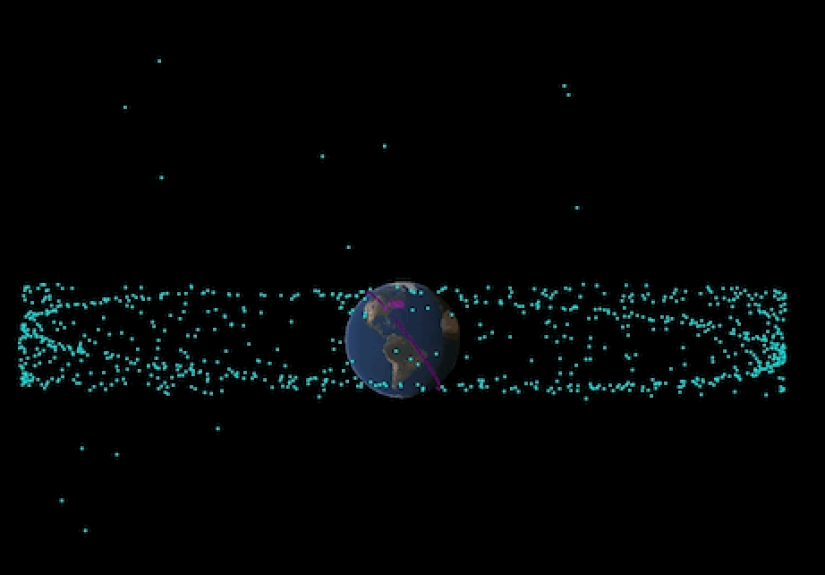
On Friday, April 13, 2029, Earth will receive a cosmic visitor close enough to make astronomers reach for their telescopes, calendars, and perhaps a second cup of coffee. The visitor is asteroid 99942 Apophis, a large near-Earth asteroid that will pass about 20,000 miles, or roughly 32,000 kilometers, above Earth’s surface. That is closer than many satellites in geosynchronous orbit, which is the kind of fact that sounds like the opening line of a science-fiction movie but is, thankfully, real science rather than a disaster trailer.
The good news should be stated clearly: Apophis will not hit Earth in 2029. NASA’s tracking shows no risk of impact for at least the next century. The better news is that this flyby gives scientists a once-in-many-lifetimes opportunity to study a large asteroid up close without sending everyone into panic mode. Think of it as the universe parking a rocky time capsule near our front porch and politely not knocking anything over.
What Is Asteroid Apophis?
Apophis is a near-Earth asteroid discovered in 2004 by astronomers Roy Tucker, David Tholen, and Fabrizio Bernardi at Kitt Peak National Observatory in Arizona. Its official name is 99942 Apophis, and it belongs to a class of objects whose orbits bring them relatively close to Earth. Because of its size and path, Apophis is also categorized as a potentially hazardous asteroid, a technical term that describes objects large enough and close enough to merit careful monitoring.
The name “Apophis” comes from an ancient Egyptian mythological figure associated with chaos. Dramatic? Absolutely. Accurate for 2029? Not really. Despite its ominous nickname, the asteroid is not expected to cause chaos on Earth. Instead, it is expected to cause scientific excitement, media buzz, and possibly a few dramatic headlines written by people who enjoy using the words “doom” and “space rock” in the same sentence.
How Big Is Apophis?
Apophis is estimated to have a mean diameter of about 1,115 feet, or 340 meters. Its long axis may stretch at least 1,480 feet, or 450 meters. To make that easier to picture, it is often compared to the height of the Eiffel Tower or the size of a large cruise ship. It is not dinosaur-extinction large, but it is certainly not a pebble. If Earth had a neighborhood watch for space objects, Apophis would be the suspiciously large boulder cruising slowly past the driveway.
How Close Will Apophis Come to Earth in 2029?
On April 13, 2029, Apophis will pass within about 20,000 miles of Earth’s surface. That puts it inside the orbital distance of many geosynchronous satellites, which circle Earth at about 22,236 miles above the equator. In astronomical terms, this is extremely close. The Moon, by comparison, is about 238,855 miles away on average, meaning Apophis will pass much closer than our familiar lunar neighbor.
The closest approach is expected to happen over the Atlantic region. During the flyby, Apophis will move quickly across the sky from the perspective of observers on Earth. For a short time, people in parts of Europe, Africa, and western Asia may be able to see it without a telescope under clear, dark skies. It will look like a moving point of light, not a fiery dragon or a flaming bowling ball. Space is dramatic, but it is usually not as visually loud as Hollywood suggests.
Will Apophis Hit Earth?
No. Apophis will safely pass Earth in 2029. Early observations after its discovery raised concern because astronomers had limited data and the asteroid’s future path was not yet well understood. At one point, Apophis received unusual attention because preliminary calculations suggested a small possibility of impact in the future. However, follow-up observations, including radar measurements, greatly refined its orbit.
NASA now states that Apophis poses no impact risk to Earth for at least 100 years. This is an important point because asteroid risk estimates can change as scientists collect better data. That does not mean scientists are guessing wildly; it means they are doing the careful, math-heavy work of improving predictions. In the case of Apophis, more data turned a scary possibility into a safe and scientifically valuable close encounter.
Why the 2029 Flyby Matters
The 2029 Apophis flyby is not just a space curiosity. It is one of the most important natural experiments in modern planetary science. Large asteroids do not pass this close to Earth very often, especially not when scientists know about the event years in advance and can prepare instruments, telescopes, spacecraft, and observation campaigns.
When Apophis passes Earth, our planet’s gravity will tug on it. That gravitational pull is expected to change the asteroid’s orbit around the Sun. It may also alter its rotation, orientation, and possibly even surface features. Small landslides or shifts in loose surface material could occur if the asteroid’s structure responds to tidal forces. For scientists, this is like watching a stress test performed by nature itself.
A Natural Laboratory for Planetary Defense
Planetary defense is the science of finding, tracking, and, if necessary, deflecting objects that could threaten Earth. Apophis is not a threat, but studying it can help researchers understand how asteroids behave during close planetary encounters. That knowledge matters because future asteroids may not be so polite.
The flyby will help scientists test models of asteroid motion, structure, density, spin, and surface behavior. These details are not trivia. If humans ever need to deflect a dangerous asteroid, knowing whether it is a solid rock, a loose rubble pile, or something in between could shape the entire mission strategy. You would not use the same method to push a bowling ball and a pile of gravel, even if both are technically “things you do not want falling on your house.”
NASA’s OSIRIS-APEX Mission
NASA has redirected the spacecraft formerly known as OSIRIS-REx to study Apophis after its historic 2029 Earth flyby. After successfully returning a sample from asteroid Bennu to Earth in 2023, the spacecraft was renamed OSIRIS-APEX, short for OSIRIS-Apophis Explorer. Its new mission is to investigate Apophis after the asteroid has been altered by Earth’s gravity.
OSIRIS-APEX is expected to study the asteroid’s surface, composition, and physical behavior. One proposed activity involves using spacecraft thrusters to disturb dust and small rocks on the surface, allowing scientists to see what lies just beneath. That sounds like cosmic leaf blowing, but with better cameras and fewer annoyed neighbors.
ESA’s Ramses Mission
The European Space Agency is preparing the Ramses mission, formally known as the Rapid Apophis Mission for Space Safety. Ramses is designed to rendezvous with Apophis before the 2029 flyby and accompany it as Earth’s gravity affects the asteroid. The mission aims to observe Apophis before, during, and after the encounter, providing a before-and-after portrait of how a large asteroid responds to close planetary forces.
Ramses could help measure Apophis’s shape, rotation, surface changes, density, porosity, and internal structure. That information would support future planetary defense planning by showing how an asteroid reacts when nature gives it a gravitational squeeze. Scientists rarely get to watch such a large near-Earth object undergo this kind of close encounter in real time, so the 2029 event is a scientific jackpot.
Can People See Apophis from Earth?
Yes, some people may be able to see Apophis with the naked eye during the 2029 close approach, depending on location, weather, and sky conditions. The best viewing regions are expected to include parts of Europe, Africa, and western Asia. It will not dominate the sky like the Moon, and it will not streak across the atmosphere like a meteor. Instead, it should appear as a moving point of light, similar to a star that has suddenly remembered it has somewhere to be.
For casual skywatchers, binoculars or a small telescope may make the experience easier. Astronomy clubs, planetariums, universities, and science museums will likely host public viewing events. Because the flyby date is known years ahead of time, the 2029 Apophis encounter could become one of the most widely observed asteroid events in history.
Tips for Watching the 2029 Flyby
The first step is to check whether Apophis will be visible from your region. As the date approaches, astronomy organizations will publish detailed viewing maps, timing charts, and sky directions. Choose a dark location away from city lights, give your eyes time to adjust, and bring binoculars if you have them. A skywatching app may help you identify the asteroid’s path, but remember to dim your phone screen so you do not sabotage your night vision.
If you live outside the visibility zone, do not worry. Major observatories and space agencies are expected to provide livestreams, images, animations, and educational coverage. In other words, even if clouds show up like uninvited party guests, you can still follow the event online.
Why Scientists Track Near-Earth Asteroids
Near-Earth asteroids are remnants from the early solar system. They are leftovers from the planet-building era, preserved for billions of years in space. Studying them helps scientists understand how planets formed, how organic materials may have moved through the solar system, and how small bodies evolve over time.
Tracking asteroids is also a practical safety measure. Organizations such as NASA’s Center for Near Earth Object Studies and the International Asteroid Warning Network help monitor objects that pass near Earth. Observations from professional observatories, radar facilities, and skilled amateur astronomers all contribute to better orbit calculations.
The Role of Radar and Follow-Up Observations
Discovering an asteroid is only the beginning. To understand whether it could ever pose a risk, astronomers need follow-up observations across time. Each observation improves the orbit calculation and reduces uncertainty. Radar can be especially valuable when an asteroid passes close enough, because radar measurements can provide highly precise distance and velocity data.
Apophis is a perfect example of why follow-up matters. Early uncertainty made the asteroid seem more concerning than it is today. Years of careful observations transformed the story from “possible future danger” into “safe close flyby and scientific opportunity.” That is how good science works: it updates the answer when better evidence arrives.
Could Humans Deflect a Dangerous Asteroid?
The short answer is yes, under the right conditions and with enough warning time. NASA’s DART mission demonstrated that a spacecraft can change an asteroid’s motion by intentionally crashing into it. DART targeted Dimorphos, a small moonlet orbiting the asteroid Didymos, and successfully shortened its orbital period. That mission did not involve a threat to Earth; it was a test of planetary defense technology.
A real asteroid deflection mission would depend on many factors, including the asteroid’s size, composition, orbit, warning time, and structure. The more time scientists have, the smaller the push needed to change the object’s future path. This is why asteroid detection is so important. Finding a hazardous object decades in advance is much better than discovering one after it has already developed a taste for dramatic entrances.
Common Myths About Apophis
Myth 1: Apophis Will Destroy Earth
False. Apophis will not hit Earth in 2029, and NASA has ruled out impact risk for at least the next 100 years. It is large enough to deserve attention, but it is not on a collision course with our planet.
Myth 2: It Will Crash into Satellites
Apophis will pass closer than some geosynchronous satellites, but its path is not expected to carry it through the crowded ring where those satellites orbit. Scientists track both the asteroid and satellite regions carefully.
Myth 3: A Close Asteroid Means Immediate Danger
“Close” in astronomy does not always mean dangerous. Space is enormous, and a near pass can still be safely separated from Earth by tens of thousands of kilometers. Apophis is close enough to be scientifically thrilling, not close enough to be a disaster.
What Apophis Can Teach Us About the Solar System
Apophis is a stony asteroid, likely made of silicate materials along with nickel and iron. It may be elongated or even shaped somewhat like a peanut, based on radar observations. Scientists want to learn more about its surface texture, internal structure, density, and spin state. These details can reveal how asteroids form, break apart, reassemble, and evolve over millions or billions of years.
The 2029 flyby may also show whether Earth’s gravity can trigger movement on the asteroid’s surface. If Apophis experiences landslides, dust shifts, or changes in rotation, researchers will have rare evidence of how tidal forces reshape small bodies. That knowledge applies not only to Apophis but also to many other near-Earth asteroids that may one day require closer study.
Why the Public Should Care
Apophis is a rare chance for the public to engage with real planetary science. It combines suspense, safety, visibility, and discovery in one event. Unlike many deep-space missions that happen far beyond everyday imagination, this asteroid will pass close enough for millions or even billions of people to understand the scale of the event.
It is also a reminder that Earth is part of a dynamic solar system. Asteroids are not merely ancient rocks drifting in darkness. They are records of planetary history, potential resources, scientific targets, and, in rare cases, hazards. Learning about them makes humanity better prepared and more connected to the cosmic neighborhood we live in.
Conclusion: A Close Encounter Worth Celebrating
The 2029 Apophis flyby is not a doomsday event. It is a historic close approach by a large asteroid that will safely pass Earth while giving scientists an extraordinary opportunity to learn. Apophis will come closer than many satellites, may be visible to the naked eye from parts of the world, and will be studied by telescopes and spacecraft before and after its encounter with Earth.
In a world where space news often arrives wrapped in dramatic headlines, Apophis offers something better: real wonder without real danger. It is a reminder that science can turn fear into knowledge, uncertainty into precision, and a rock named after chaos into one of the most exciting astronomy events of the century.
Experience Notes: What the 2029 Apophis Flyby May Feel Like for Skywatchers
Imagine standing outside on a clear April evening in 2029, looking up at a sky that people have watched for thousands of years. The stars appear still, the air feels ordinary, and somewhere above the planet a large asteroid is quietly passing closer than many satellites. Nothing shakes. No alarms sound. The dog does not suddenly learn calculus. Yet the moment feels different because you know what you are seeing is not just another star. It is Apophis, a mountain-sized relic from the early solar system, sliding past Earth on a path calculated by generations of careful observation.
For many people, the experience will begin long before the asteroid appears. Schools may organize astronomy nights. Science museums may set up public programs. Local astronomy clubs may bring telescopes to parks, rooftops, and open fields. Families may gather outside with blankets, warm drinks, and at least one relative who insists they “definitely saw it” five minutes before the official viewing time. That is part of the fun. Major sky events have a way of turning ordinary places into temporary observatories.
The best part of the Apophis flyby is that it invites curiosity without requiring fear. A person watching the asteroid may feel a small shiver at the scale of the universe, but also comfort in the precision of modern science. Astronomers once worried about Apophis because early data left room for uncertainty. Now, after years of tracking, they can say with confidence that the asteroid will miss Earth. That transformation from concern to confidence is a powerful story. It shows why science is not about pretending to know everything immediately. It is about measuring, checking, recalculating, and getting closer to the truth.
For children, the 2029 flyby could be unforgettable. A moving point of light may not seem spectacular at first, especially in an age of high-definition screens and superhero explosions. But when a parent, teacher, or astronomer explains that the light is a real asteroid passing through space, the moment becomes larger. It becomes a doorway into questions: Where did it come from? How do we know where it is going? Could we stop one if we needed to? Why are asteroids shaped like potatoes that lost a fight? Those questions can spark a lifelong interest in astronomy, engineering, physics, or planetary defense.
Adults may experience the event differently. The flyby is a reminder that humanity is both small and remarkably capable. We cannot control every object in space, but we can discover, track, study, and sometimes even redirect them. Apophis will pass safely, but it will also pass with a message: preparedness matters. Telescopes matter. International cooperation matters. Patient data collection matters. The sky may look calm, but behind that calm is a global network of people watching carefully.
Whether viewed through binoculars, a telescope, a livestream, or a news update the next morning, Apophis will offer a rare shared experience. It is not a monster from space. It is a messenger from deep time, swinging by just close enough to remind us that the universe is active, beautiful, and full of surprises. And for once, the surprise comes with excellent advance notice.