Table of Contents >> Show >> Hide
- The Watercolors That Don’t Behave Like Ordinary Still Lifes
- What They Are Believed to Show
- Why a 1940s British Artist Might Have Painted Them
- From Sacred Object to Colonial Commodity
- Why Museums Are Rethinking Displays
- What the Eight Pictures Actually Reveal
- Why This Story Keeps Going Viral
- A Longer Reflection on the Experience of Encountering This Kind of Art
- Conclusion
Some art invites you in with grace. This story does that, then quietly pulls the rug out from under your loafers.
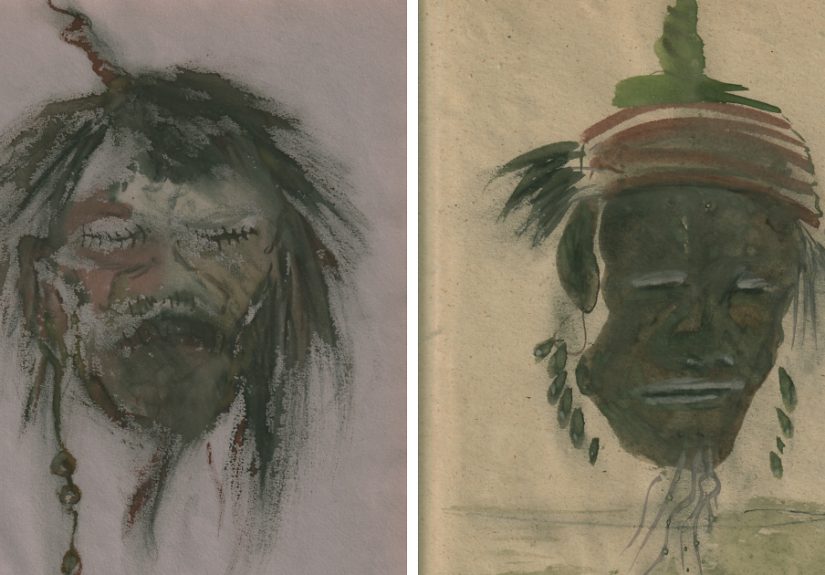
A small set of anonymous watercolors, usually described online as British works from around the 1930s or 1940s, resurfaced in art-and-curio circles and later went viral as a set of eight eerie, elegant images. At first glance, they look like delicately observed portrait studies: moody shadows, soft washes, careful contours, and the kind of old-school watercolor restraint that makes viewers lean in. Then the subject lands. These are believed to be paintings of tsantsa, often sensationalized in English as “shrunken heads.” Suddenly, what looked like a niche art discovery turns into a much bigger story about collecting, colonialism, museums, and the strange ability of beauty to make people forget to ask harder questions.
Editor’s note: Viral retellings of this story often repeat a major mistake. Tsantsa are associated with Shuar and Achuar communities in Ecuador and nearby Amazonian regions, not Māori communities in New Zealand. That correction matters, because the history matters.
The Watercolors That Don’t Behave Like Ordinary Still Lifes
Part of the fascination here is formal. These works are not splashy horror art. They are quiet. Measured. Almost polite. The painter appears less interested in spectacle than in observation. The faces are rendered with care, the textures are studied, and the compositions feel more like portrait sheets than carnival advertisements. That calm surface is exactly why the images linger. They do not scream. They whisper, and whispers tend to echo longer.
Online descriptions of the set are a little fuzzy, which only adds to the mystery. One viral post featured eight images, while other gallery-style listings have referred to a larger group. That uncertainty is actually revealing. These paintings arrive to us the way many odd historical objects do: with incomplete provenance, partial documentation, and just enough information to make the imagination start doing jumping jacks.
And yet even with the gaps, the broad outline is compelling. Anonymous British watercolors. Roughly mid-20th century. Likely based on real objects rather than fantasy. Eventually circulating through collectors, dealers, and curiosity-minded art spaces before landing in the internet’s favorite museum of modern feelings: the viral post.
What They Are Believed to Show
The subject is what transforms these watercolors from merely unusual to culturally loaded. Tsantsa were not party props from some dusty Victorian prank shop. In their original ceremonial context, they were linked to specific spiritual and social beliefs among Indigenous communities including the Shuar and Achuar. In short, they were meaningful objects, not just macabre décor for someone’s shelf between a brass telescope and a bad decision.
That distinction is the whole ballgame. Once an item moves from ceremonial life into outsider fascination, the story can get flattened. Nuance exits. Context packs a suitcase. What remains is usually a simplified tale told for shock value. That is exactly what happened in much of the older English-language treatment of tsantsa. They were often displayed as proof of “primitive savagery,” when in reality they belonged to a complex belief system that outsiders badly misunderstood and frequently exploited.
Why the Viral Headline Needed a Reality Check
One of the most frustrating things about the viral retellings is how quickly they drift into misinformation. When a story like this gets passed around, details mutate like they are trying to audition for a sci-fi remake. The biggest error is the cultural misidentification. Saying these objects were Māori is not a tiny typo. It scrambles geography, history, and identity all at once.
Better storytelling begins with naming people correctly. It also means recognizing that tsantsa were never just spooky collectibles floating through time. They were tied to real communities, real histories, and later, real harm caused by outsiders who wanted to own, display, buy, sell, copy, or gawk at them.
Why a 1940s British Artist Might Have Painted Them
This is where the story gets especially interesting. If these paintings really were made in Britain around the 1930s or 1940s, then the obvious question is: where did the artist encounter the original objects?
There are several plausible answers. By the late 19th and early 20th centuries, tsantsa had entered the transatlantic trade in curiosities. Museums, private collections, academic institutions, curiosity shops, and colonial-era cabinets of wonder all helped normalize their movement into Europe and the United States. An artist in Britain could have seen one in a museum, in a private collector’s possession, in an anthropological collection, or even in a dealer’s stock. None of those possibilities is comforting, but all are historically plausible.
That is what gives the paintings their extra charge. They are not simply portraits of unusual objects. They are traces of a wider circulation network. In other words, the watercolors are about more than the faces they depict. They are about the route those faces traveled through empire, commerce, scholarship, display culture, and art.
The Art-History Problem Hidden in Plain Sight
There is also a deeper art question here: what happens when watercolor, a medium so often linked with delicacy and refinement, is used to record human remains or sacred objects stripped from their original meaning?
The answer is not simple. On one hand, the paintings are visually compelling. On the other, they aestheticize something that should not be severed from its cultural context. Beauty can illuminate history, but it can also soften it. Watercolor is especially good at that trick. It can make almost anything look contemplative. Even unsettling subjects can come dressed in a soft wash and impeccable tonal balance.
From Sacred Object to Colonial Commodity
To understand why these paintings exist at all, you have to understand the market around the objects they likely depict. Western demand for tsantsa as curios rose during the 19th and early 20th centuries. Once collectors and tourists started treating them as exotic trophies, the market changed the object itself. Demand encouraged imitation, forgery, commercial production, and a whole ecosystem of confusion.
That confusion still haunts museums and private collections today. Not every so-called shrunken head in a collection is a ceremonial tsantsa. Some were made for sale. Some were copied badly. Some may have been made from animal material rather than human remains. Some institutions now estimate that a large percentage of objects in collections are commercial-market examples or outright fakes rather than ceremonial originals.
This matters because it changes how we read the paintings. The anonymous artist may have painted ceremonial tsantsa. Or commercial ones. Or collector-owned examples already detached from their meaning. The watercolors preserve the appearance of the objects, but not the certainty of their identity. In a weird way, that uncertainty is part of the truth. Colonial collecting was messy, extractive, and often poorly documented. The archive it left behind is full of objects that arrive with labels but not necessarily clarity.
Authentic, Commercial, or Fake?
Modern researchers do not just squint dramatically and declare an answer like they are in a detective show with excellent cheekbones. Authentication now relies on close anatomical study, documentation, and in some cases imaging technology such as CT scanning. Recent scholarship has shown how museums and universities can evaluate structural details, compare objects against known criteria, and work with Ecuadorian authorities or descendant communities when repatriation is being considered.
That is a huge shift from the old days, when an object could sit in a drawer, a case, or a curiosity cabinet for decades with little more than a creepy label and a shrug.
Why Museums Are Rethinking Displays
For a long time, museums displayed tsantsa as crowd magnets. The logic was brutally simple: people love weird stuff. But many institutions now recognize that this approach did real damage. Displaying human remains without proper context can turn sacred or ancestral material into spectacle. It can also reinforce racist ideas by framing non-Western cultures as savage, grotesque, or frozen in time.
That is why the broader museum world has changed tone in recent years. Some institutions have removed tsantsa and other human remains from public view. Others are reevaluating their labels, provenance records, and display ethics. Still others are turning to descendant communities for guidance on care, interpretation, shared stewardship, or repatriation.
This modern context makes the watercolor story feel different. Ten years ago, a viral post about “beautiful shrunken-head paintings” might have lived entirely inside the realm of spooky internet delight. Today, viewers are more likely to ask: Whose heritage is this? Who collected it? Was it acquired ethically? Why was it painted? Should it have been displayed at all?
Those are better questions. Less scream, more substance.
What the Eight Pictures Actually Reveal
Here is the twist that makes this story worth more than a click: the watercolors are not interesting only because of what they show. They are interesting because of what they reveal about the people who looked at these objects, collected them, traded them, painted them, and later reposted them online.
The paintings suggest that by the 1930s or 1940s, tsantsa had become visually available enough in the Western world to be studied as subjects for art. That alone says a lot. Something sacred and culturally specific had become portable, collectible, viewable, paintable. In that sense, the watercolors are evidence of a Western gaze at work: curious, fascinated, disciplined, aestheticizing, and not always especially self-aware.
They may also show how art can both preserve and distort. The painter seems genuinely attentive. The renderings are not careless. But careful looking does not automatically equal ethical looking. You can draw something beautifully and still participate in a system that removed it from the people to whom it belonged.
How to Look at the Images More Responsibly
A better way to approach these works is to treat them not as novelty content, but as layered historical evidence. First, they are artworks. Second, they are records of objects. Third, they are clues to a collecting culture that blurred anthropology, empire, entertainment, and commerce. Fourth, they are reminders that internet virality loves mystery but rarely packs context in the same suitcase.
Seen that way, the real mystery is not simply, “Wow, what are these?” It is, “What kind of world made these paintings seem normal?” That question has a longer shelf life than the jump scare headline.
Why This Story Keeps Going Viral
The answer is easy: it has the perfect internet recipe. Step one, start with something lovely. Step two, add a shocking reveal. Step three, sprinkle in mystery. Step four, let everyone feel clever for being disturbed. Bake until shareable.
But the lasting value of the story lies elsewhere. The watercolors force two reactions to happen at once. You admire the craft, then question the circumstances. You notice the beauty, then bump into the ethics. That tension is what makes the images memorable. They are not just creepy. They are complicated.
And frankly, complicated is better. Creepy burns hot and fast. Complicated sticks around and asks for a chair.
A Longer Reflection on the Experience of Encountering This Kind of Art
Imagine seeing one of these paintings without any caption at all. From a distance, it might read like a study from an ethnographic sketchbook, a curious portrait, or a fragment from some forgotten archive. The brushwork is controlled. The palette is restrained. The paper carries that mellow, time-softened authority old watercolors tend to wear so well. You would probably lean in because the image feels quiet, not loud. It does not demand attention. It earns it.
Then comes the second look, the one that changes the room.
This is often how the experience works with difficult historical objects: the first response is formal, the second moral. At first, the brain notices composition, texture, age, and mood. Then it catches up to meaning. Suddenly the painting is no longer just “good.” It is loaded. The feeling is not exactly fear, and not exactly admiration either. It is closer to a mental stutter step. You are still looking, but now you are also evaluating your own looking.
That is part of why these watercolors are so effective. They recreate, in miniature, the exact discomfort museums and collectors are now being forced to confront on a larger scale. What does it mean to admire an image that came from a system of extraction? What should a viewer do when craftsmanship and unease arrive at the same table?
For many people, the answer is not to look away, but to look better. Better means slower. Better means asking what the label left out. Better means recognizing that beautiful objects can carry ugly histories without ceasing to be visually powerful. In fact, sometimes their beauty is what helped those histories travel so easily in the first place. A delicate watercolor can act like velvet packaging around a deeply uncomfortable subject.
There is also something peculiarly modern about discovering these images online. On social media, every object risks becoming content before it becomes history. The watercolors are perfect bait for that system because they deliver surprise in one glance. Yet the more honest experience is not the instant reaction. It is the delayed one: the hour-later feeling when you realize the paintings are really about distance. Distance between the object and its makers. Distance between ceremony and commodity. Distance between looking and understanding.
People who love archives, museums, flea markets, and old paper know this sensation well. You find something visually dazzling, then discover it is attached to a story far heavier than its frame suggests. That does not make the object worthless. It makes it demanding. It asks more of the viewer than taste. It asks for historical humility.
In that sense, the most meaningful experience related to these watercolors is not shock. It is recalibration. You begin with aesthetic pleasure, move through discomfort, and land in a better question. Not “Isn’t this bizarre?” but “What responsibilities come with seeing this now?” That is a much richer ending. Less haunted house, more haunted history.
Conclusion
The anonymous 1940s-style watercolors went viral because they offer a perfect contradiction: they are graceful images tied to a deeply uneasy history. But the best way to understand them is not as spooky curios from a stranger corner of the internet. They are windows into a world where sacred cultural material was absorbed into markets, collections, and visual culture far from its original meaning.
That is why the paintings matter. They are beautiful, yes. They are mysterious, definitely. But most of all, they are revealing. They show how easily art can preserve a surface while burying a context, and how urgently that context has to be restored. If these images deserve attention today, it is not because they are eerie enough to stop a scroll. It is because they remind us that the past is rarely just sitting there quietly. Sometimes it is staring back, framed in watercolor, waiting for us to finally ask better questions.