Table of Contents >> Show >> Hide
- Why Make Wooden Fishing Lures?
- Best Woods for Homemade Fishing Lures
- Tools and Materials You’ll Need
- Step 1: Choose the Lure Style Before You Touch the Wood
- Step 2: Draw the Profile and Cut the Blank
- Step 3: Shape the Body
- Step 4: Plan the Hardware and Ballast
- Step 5: Drill, Slot, and Install the Structural Parts
- Step 6: Seal the Wood Properly
- Step 7: Prime and Paint the Lure
- Step 8: Add the Clear Coat
- Step 9: Install Hooks and Final Hardware
- Step 10: Water Test and Tune the Lure
- Common Mistakes to Avoid
- A Simple Beginner Build Example
- Experience: What Making Wooden Fishing Lures Teaches You
- Conclusion
Note: Body-only HTML for direct web publishing or CMS paste-in.
If you have ever looked at a beat-up old wooden plug and thought, “I could make that,” you are absolutely correct. You can. In fact, making wooden fishing lures is one of those rare hobbies that feels equal parts woodworking, fishing, art project, and mild obsession. One minute you are cutting a simple basswood blank. The next minute you are debating whether your homemade topwater bait needs a wider tail taper, a sharper lip angle, or “just a tiny bit more glitter.” That is how this hobby gets you.
The good news is that learning how to make wooden fishing lures does not require a giant workshop or a beard so impressive it has its own ZIP code. You can start with a few simple tools, a block of wood, some basic hardware, and enough patience to sand something more than once. The better news is that wooden lures are still loved for a reason: they float beautifully, can be tuned to create distinct actions, and have a handmade charm that mass-produced baits simply cannot fake.
This guide walks you through the full process, from choosing the right wood to shaping, sealing, painting, and tuning your lure in the water. Whether you want to build a topwater plug, a slim jerkbait, or a chunky little crankbait, the fundamentals are the same. Make it balanced, make it durable, and make it tempting enough that a fish thinks, “Yes, that suspiciously perfect wooden snack looks safe.”
Why Make Wooden Fishing Lures?
Homemade wooden fishing lures are not just a craft-table flex. They offer real advantages on the water. Wood has buoyancy that helps topwater lures sit correctly, gives crankbaits a lively feel, and lets plugs back out of cover better than some heavier hard baits. Many anglers also like how different woods affect vibration and action. A soft, light wood can produce a lively wobble, while a denser wood often gives a tighter, more controlled movement.
Another big reason is customization. You can make a lure that matches your local forage, your preferred retrieve, and your favorite fishing conditions. Want a wakebait that crawls over shallow grass? Easy. Need a compact squarebill that bangs off stumps without rolling over like a tired raccoon? Also doable. You control the size, shape, weighting, color, hook placement, and finish.
And yes, there is also the bragging-rights factor. Catching a fish on a lure you carved yourself feels fantastic. Catching several fish on it feels like you deserve dramatic entrance music.
Best Woods for Homemade Fishing Lures
Balsa
Balsa is the classic choice for many handmade crankbaits because it is light, buoyant, and easy to shape. It creates lively action with minimal effort. The downside is durability. Balsa dents easily, so it needs careful sealing and a tough topcoat.
Basswood
Basswood is a favorite for beginners because it carves cleanly, sands smoothly, and holds detail well. It is not as buoyant as balsa, but it is sturdier and more forgiving. If you are making your first few wooden lures, basswood is a smart place to start.
Cedar
Cedar is popular for topwater plugs and some saltwater-style wooden baits. It is lightweight, reasonably durable, and naturally moisture resistant. It also has a classic handmade-plug feel that many lure builders love.
Pine and Other Accessible Woods
Pine can work for practice lures and simple plugs, though grain and density can vary. For beginners who want affordable material, it is fine for learning shape and balance before moving to more consistent woods.
Best beginner choice: basswood. It is easy to work, less fragile than balsa, and still light enough for effective lure action.
Tools and Materials You’ll Need
- Wood blank or block
- Pencil and paper template
- Coping saw, band saw, or carving knife
- Rasp, file, or carving tools
- Sandpaper in coarse, medium, and fine grits
- Drill and small bits
- Screw eyes or through-wire hardware
- Split rings and treble or inline single hooks
- Lead wire, lead shot, or other ballast
- Epoxy or penetrating sealer
- Primer and paint
- Clear topcoat
- Lure eyes, if desired
- Super glue or epoxy adhesive
You do not need every fancy lure-building gadget on day one. A simple setup can make excellent baits. The key is accuracy, not glamour. Fish have never inspected a garage for matching storage bins before biting.
Step 1: Choose the Lure Style Before You Touch the Wood
Before cutting anything, decide what kind of lure you are making. Shape follows function.
Topwater Plug
Great for beginners. A floating cigar shape or popper is easier to build because you do not need a diving bill. Focus on balance, hook placement, and surface action.
Crankbait
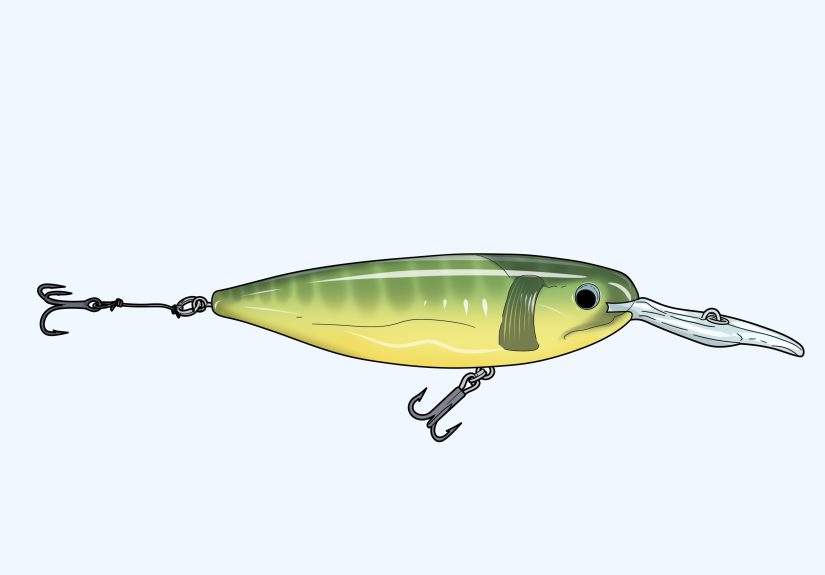
A good project once you are comfortable shaping wood. The lure body, lip slot, ballast position, and line tie all work together to determine dive depth and wobble.
Jerkbait or Minnow Plug
These slimmer wooden lures can be twitched or retrieved steadily. They look simple, but balance matters a lot. Small weight changes can turn a nice glider into a spinning little drama queen.
Beginner tip: start with a 3-inch topwater plug or a shallow-running crankbait. They are easier to tune than ultra-small trout plugs or giant musky baits.
Step 2: Draw the Profile and Cut the Blank
Sketch the lure on paper first. Draw both the side profile and the top view. This helps you visualize symmetry, hook placement, line tie location, and any lip slot you may need.
Transfer the outline to your wood blank. Cut the side profile first, then the top profile. Go slowly and leave a little extra material. It is much easier to remove wood than to give a lure emotional support after accidentally sawing off its nose.
For a simple example, a basic 3-inch basswood topwater lure can start as a rectangular blank about 3 inches long, 3/4 inch tall, and 3/4 inch thick. That gives you room to round the body and taper the tail.
Step 3: Shape the Body
Now the lure starts looking like a lure instead of a small piece of suspicious lumber. Use a rasp, carving knife, file, or rotary tool to round the edges and refine the body. Keep checking both sides to stay symmetrical.
Most wooden lures are rounded on the belly and back, with slightly flatter sides depending on the style. A topwater walking bait may be cigar-shaped. A crankbait often has fuller shoulders and a rounded belly. A minnow plug usually has a tapered tail and slimmer cross-section.
Once the rough shape is complete, sand it smooth. Start with coarser grit, then move to finer grit. By the end, the lure should feel even and balanced in your hand, with no major flat spots unless they are intentional for action.
Step 4: Plan the Hardware and Ballast
This is where many homemade lures either become fish-catching magic or decorative desk ornaments.
You need to decide:
- Where the line tie will go
- Where the hook hangers will go
- Whether to use screw eyes or through-wire construction
- Whether the lure needs added weight
Screw eyes are easier for beginners and work well on small to medium freshwater lures when installed correctly into sealed pilot holes. Through-wire construction is stronger and often preferred for larger plugs or heavier-duty applications.
Ballast affects how the lure sits and moves. Add too little and the bait may roll or blow out. Add too much and it may sink like a guilty anchor. For floating wooden lures, test the body in water before final finishing. Drill a small belly hole, add temporary weight, and see how the lure sits. You usually want it level or slightly tail-down, depending on style.
Example: A small crankbait may need belly weight near the front hook hanger to stabilize the wobble. A walking topwater bait often benefits from rear weighting to help casting and create a tail-down posture.
Step 5: Drill, Slot, and Install the Structural Parts
Drill pilot holes carefully for screw eyes or for any ballast cavity. If you are making a crankbait, cut a lip slot at the nose. The angle and position of the bill influence how quickly the lure dives, how deep it runs, and how wide or tight the action feels.
A more aggressive lip angle and larger bill generally create more diving potential, while bill shape and line-tie position also affect stability and wiggle. For shallow squarebills, the lip helps the bait deflect off cover. For slimmer minnows, a smaller lip often gives tighter action.
Dry-fit everything before gluing. Make sure the hook hangers are centered and the bill is straight. A crooked lip may give your lure “personality,” but not the kind you want.
Step 6: Seal the Wood Properly
Sealing is non-negotiable. Unsealed wood absorbs water, swells, softens around hardware, and eventually ruins your hard work. A penetrating epoxy sealer or thin epoxy coat is a common choice because it stabilizes the wood and helps create a moisture barrier.
Pay extra attention to end grain, hook hanger holes, lip slots, and any drilled cavities. Those spots are especially vulnerable to moisture. Let the sealer cure fully, then sand lightly to smooth raised grain.
Some builders follow epoxy sealing with primer and paint, then finish with a protective clear coat. Others use spar urethane as the final exterior finish for moisture and UV resistance. The important thing is building a durable finish system, not just tossing one hopeful coat on there and calling it “marine grade.”
Step 7: Prime and Paint the Lure
After sealing and sanding, apply primer so your paint adheres better and colors appear cleaner. White primer is a common choice because it makes bright colors pop.
You can paint wooden fishing lures with an airbrush, hobby paint, paint markers, or even careful hand brushing. Start simple. Fish do not demand museum-grade realism. Plenty of great lures use basic color patterns like silver-black, firetiger, shad, bluegill, frog, bone, chartreuse, or crawfish.
For beginners, try one of these easy paint schemes:
- Shad: white belly, silver sides, dark back
- Bluegill: yellow-green sides, darker back, orange throat
- Bone: creamy off-white all over for topwater plugs
- Firetiger: chartreuse body with orange belly and dark bars
Add lure eyes if you like. Adhesive eyes usually hold better with a dab of strong glue, then a clear topcoat over them for protection.
Step 8: Add the Clear Coat
The clear coat protects paint, keeps water out, and helps the lure survive teeth, rocks, docks, and your occasional “I can definitely cast through that tree” confidence.
Epoxy topcoats are popular because they create a thick, glossy shell. Spar urethane is another option and offers moisture resistance with exterior durability. Whichever finish you choose, apply it evenly and allow proper curing time. Rushing the clear coat is how fingerprints become permanent design elements.
Step 9: Install Hooks and Final Hardware
Once the finish cures, install split rings and hooks. Match hook size to the lure body so the bait still balances and the hooks do not tangle with each other. Too much hardware can ruin action. Too little can reduce hookup percentage.
Treble hooks are traditional on many hard baits, but some anglers swap to inline singles for easier handling and less damage to fish. Either way, make sure the lure remains balanced after final hardware goes on.
Step 10: Water Test and Tune the Lure
This is the moment of truth. Test the lure in a bucket, bathtub, pond edge, or calm stretch of water. Watch how it sits still, how it tracks on a slow retrieve, and whether it blows out at faster speed.
If a lipped lure veers left or right, small adjustments to the line tie often fix it. Bend the eye slightly in the opposite direction of the pull. Tiny changes matter. This is lure tuning, not metal origami.
If the lure rolls over, it may need more ballast, a different hook size, or a better-centered lip. If it sits too low, remove weight or use lighter hooks. Tuning is normal. Even experienced builders expect to make adjustments.
Common Mistakes to Avoid
- Skipping the sealer: water will find every weak spot
- Ignoring symmetry: uneven bodies usually swim poorly
- Overweighting the lure: great if you are building a pebble
- Using oversized hooks: they can kill action and foul each other
- Rushing cure times: sticky finishes are not a design trend
- Changing too many variables at once: tune one thing at a time
A Simple Beginner Build Example
Let’s say you want to make a 3-inch wooden topwater walking bait for bass. Start with basswood. Cut a cigar-shaped blank, round the body, and taper the tail slightly. Install front and rear hook hangers plus a nose line tie with screw eyes. Add a little rear ballast so the lure sits tail-down. Seal it with penetrating epoxy, sand lightly, prime it white, paint it bone, add small eyes, and finish with a tough clear coat. Then test it with your preferred hooks. If it glides side to side with light rod twitches, congratulations: you made a lure that may soon be chewed by something mean and green.
Experience: What Making Wooden Fishing Lures Teaches You
The first thing wooden lure making teaches you is humility. The second thing it teaches you is sanding. So much sanding. You begin with confidence, staring at a neat little wood blank as if you are a cross between a master craftsman and a tournament pro. Then you carve one side slightly thinner than the other, drill a pilot hole a hair off center, and discover that your “precision bait” now swims like it is trying to dodge taxes. That is normal.
What surprises many beginners is how much you learn from each failed lure. A plug that rolls over tells you something about ballast. A crankbait that tracks left teaches you about line-tie tuning. A topwater bait that sits too flat shows you how important posture is to action. Every mistake becomes information, and that is part of what makes the hobby so addictive. You are not just making objects. You are learning how shape, buoyancy, weight, and hardware all interact in moving water.
There is also a strange satisfaction in the quiet parts of the process. Tracing a pattern. Rounding the shoulders. Wet-sanding a cured finish until it feels smooth as glass. Painting gill marks on a lure no fish will ever admire in detail, but that you know are there. It slows you down in a good way. Fishing can be loud and exciting. Lure making is often calm, careful, and surprisingly meditative.
Then comes the best part: testing. The first time a homemade lure lands with a satisfying plop and actually behaves the way you hoped, something clicks in your brain. It is no longer just a craft project. It has become a working fishing tool. And when a bass explodes on a topwater plug you made yourself, or a crankbait you carved starts knocking fish off a stump line, the feeling is hard to beat. Store-bought lures catch fish. Homemade lures catch fish and stories.
Over time, your preferences change. Many builders start out trying to make every lure look ultra-realistic, then eventually realize that balance and action matter more than a perfect paint job. Others begin with simple shapes and end up experimenting with lip materials, internal weighting, or different woods. Some become collectors of their own work. Some keep only the fish-catching models. Some proudly display the weird failures too, because every builder deserves a museum of bad ideas.
Perhaps the best experience-related lesson is this: handmade wooden lures do not need to be perfect to be effective. Fish are not grading your symmetry with calipers. They react to movement, flash, vibration, profile, and opportunity. A lure with a tiny paint blemish or a slightly less-than-magazine-worthy finish can still become your favorite bait if it runs right and gets bit. That is a wonderfully freeing idea.
So if you are thinking about making your first wooden fishing lure, do it. Start simple. Expect a learning curve. Save your early attempts, even the ugly ones. They will remind you how far you have come. And one day, when a fish crushes a lure that began as a rough little block of wood on your workbench, you will understand why so many anglers never stop building them.
Conclusion
Learning how to make wooden fishing lures is part craft, part fishing science, and part happy obsession. Start with an easy wood like basswood, choose a simple lure style, focus on symmetry and sealing, and tune the final bait in the water. The details matter, but perfection is not the goal. A durable finish, smart hardware placement, and fish-catching action matter far more than making something that belongs in a glass case. Build a few, test a few, and do not be surprised if lure making turns your tackle problem into a workshop problem. There are worse hobbies.