Table of Contents >> Show >> Hide
- What Are Jade Combs?
- Why Jade Combs Are Linked to Circulation and Hair Growth
- Can Jade Combs Improve Circulation?
- Can Jade Combs Improve Hair Growth?
- What Jade Combs Can Realistically Do
- What Jade Combs Cannot Do
- How to Use a Jade Comb Safely
- Who Should Be Careful With Jade Combs?
- If Hair Growth Is the Goal, Focus on the Big Picture
- What People Often Experience With Jade Combs Over Time
- The Bottom Line
Every few years, the beauty world rediscovers an old ritual, gives it prettier packaging, and sends it back into the spotlight with the energy of a celebrity comeback tour. Jade combs are having exactly that moment. They look elegant on a vanity, feel satisfyingly cool in the hand, and promise the kind of scalp-soothing, stress-melting, hair-loving magic that makes anyone with shedding, thinning, or a permanently tense forehead say, “Fine, I’ll try it.”
But let’s separate spa-day fantasy from scalp-care reality. What are jade combs, exactly? Can they improve circulation? Can they actually help with hair growth? And are they a useful addition to a healthy hair routine, or just a very attractive rock with good marketing?
The honest answer is somewhere in the middle. Jade combs are not miracle workers. They will not turn three stressed strands into a shampoo-commercial mane by next Tuesday. But they may have a real place in a thoughtful scalp-care routine, especially if your goals are relaxation, gentle stimulation, better product distribution, and creating a healthier environment for hair over time.
What Are Jade Combs?
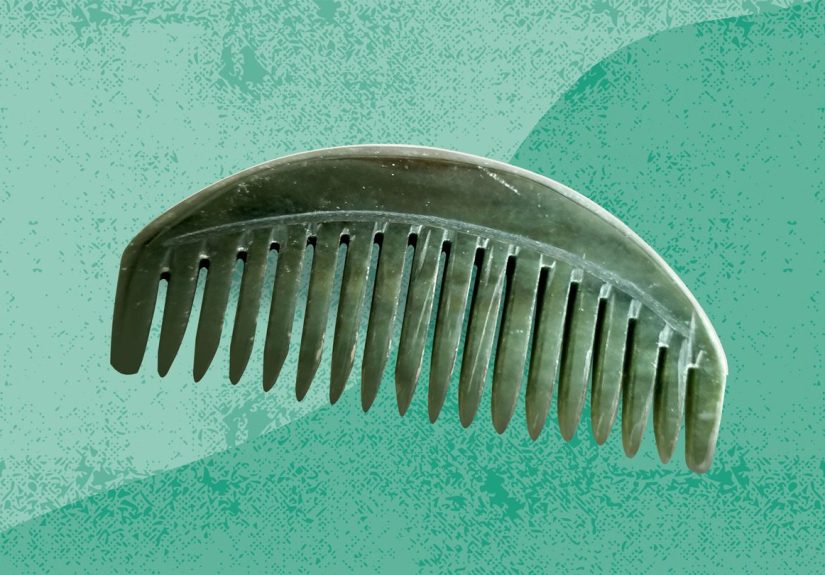
Jade combs are handheld grooming or massage tools made from jade or jade-like stone and shaped with rounded teeth, ridges, or a gua sha-inspired edge. Some look like wide-tooth combs. Others resemble sculpted scalp massagers. In both cases, the basic purpose is the same: glide the tool over the scalp to create a gentle massage.
They sit at the crossroads of beauty ritual, scalp care, and wellness. Part comb, part massage tool, part “my bathroom shelf now looks expensive,” jade combs are usually marketed as a way to stimulate the scalp, improve circulation, ease tension, and support healthier-looking hair.
That last claim is what draws most people in. Hair loss and hair thinning can feel personal, frustrating, and wildly unfair. So when a tool promises a calmer scalp and better hair growth, people listen. The key is understanding what the tool can do directly, what it might support indirectly, and where the science still says, “Interesting, but let’s not get carried away.”
Why Jade Combs Are Linked to Circulation and Hair Growth
The circulation idea
Scalp massage has long been associated with improving blood flow. That part is not particularly controversial. Gentle massage can increase circulation to the scalp in the short term, which may help the area feel warmer, looser, and more relaxed. If your scalp tends to feel tight after wearing your hair up all day, after a stressful work session, or after washing with products that leave buildup behind, a massage tool can feel surprisingly helpful.
Jade combs work through this same principle. Their teeth or ridged edges create light pressure and motion across the scalp. That mechanical stimulation may temporarily increase blood flow and help loosen tension. In practical terms, this can make the scalp feel refreshed. It can also help spread natural oils or scalp serums more evenly, which may improve the look and feel of the hair.
The hair growth idea
Hair growth is where things get more nuanced. Some small studies on scalp massage suggest it may help improve hair thickness over time, possibly by stretching the tissues around hair follicles and influencing the scalp environment. That sounds promising, and it is. But promising does not mean proven in the same way as established medical treatments for pattern hair loss.
So, if a jade comb helps at all, it is probably not because the stone itself has magical follicle powers. It is more likely because the tool encourages regular, gentle scalp massage. Think of the jade as the vehicle, not the superpower.
Can Jade Combs Improve Circulation?
Yes, probably in a temporary and practical sense. A gentle scalp massage can stimulate blood flow, which is one reason the scalp often feels relaxed or “awake” afterward. That does not mean you are unlocking some hidden turbo mode in your hair follicles, but it does mean the circulation claim is more believable than some of the wilder internet promises.
Improved circulation may also support overall scalp comfort. A relaxed scalp can feel less tight, and for some people, regular massage becomes part stress relief, part self-care, part excuse to spend five minutes not looking at notifications. That alone is not nothing. Stress can affect the hair cycle, so anything that supports a calmer routine may be helpful in the bigger picture.
Still, it is important to use sensible language here. Jade combs may support healthy circulation. They do not “detox” the scalp, reboot the follicles, or summon dramatic regrowth from thin air. Your scalp is skin, not a Wi-Fi router that just needed to be restarted.
Can Jade Combs Improve Hair Growth?
Maybe a little, indirectly, and under the right conditions. That is the balanced answer.
If you use a jade comb as a form of regular scalp massage, you may support an environment that is friendlier to healthy hair. Massage may help with blood flow, product absorption, tension relief, and possibly hair thickness over time. But current evidence does not show that jade combs themselves are a standalone treatment for significant hair loss.
This distinction matters. Hair growth problems can have many causes, including genetics, hormonal changes, stress, nutritional deficiencies, postpartum shedding, autoimmune conditions, scalp inflammation, traction from tight hairstyles, and underlying medical issues. A massage tool cannot solve all of those. If your hair loss is related to androgenetic alopecia, for example, you will likely need evidence-based treatment, not just a very committed combing ritual.
In other words, jade combs may help support scalp health and complement a routine. They should not be treated as a cure.
What Jade Combs Can Realistically Do
When used gently and consistently, jade combs can offer a handful of realistic benefits:
1. They can make scalp massage easier
Not everyone loves massaging their scalp with their fingertips, especially if they have long nails, thick hair, or limited hand mobility. A jade comb can make the process easier and more comfortable.
2. They can help you slow down
Beauty tools often work partly because they create a ritual. If a jade comb gets you to spend three to five minutes caring for your scalp instead of attacking your hair with a rushed brush-and-go routine, that is a meaningful upgrade.
3. They may help distribute oils or serums
If you use a scalp oil or lightweight serum, a jade comb can help spread the product more evenly. That may improve scalp comfort and reduce the temptation to dump half the bottle on one sad little spot.
4. They may reduce the feeling of tension
People who hold stress in the temples, crown, or back of the head often notice that scalp massage feels immediately soothing. That tension relief can be a major reason the tool earns a permanent place in the routine.
5. They can be gentler than some harsher tools
If the teeth are smooth and the pressure is light, a jade comb can feel less aggressive than rough plastic tools or overenthusiastic fingernails. The keyword here is can. A poorly made tool with sharp edges is not doing your scalp any favors.
What Jade Combs Cannot Do
They cannot diagnose why you are losing hair. They cannot replace a dermatologist. They cannot undo years of traction from tight styles. They cannot correct low iron, thyroid issues, or hormonal shifts. And they definitely cannot out-muscle genetics by sheer vibes.
They also cannot replace treatments with stronger evidence behind them. If you have ongoing thinning, widening part lines, patchy bald spots, pain, burning, flaking, or sudden shedding, it is worth getting evaluated. A pretty tool is not a substitute for a real answer.
How to Use a Jade Comb Safely
If you want to try one, the safest approach is simple, gentle, and consistent.
Start with a clean scalp and a clean tool
You can use a jade comb on dry hair, lightly damp hair, or while applying a scalp serum or oil. Just make sure the comb is clean. A tool that collects oil, skin flakes, and product residue can become less spa ritual and more tiny bacteria shuttle.
Use light pressure
Glide the comb over the scalp with enough pressure to feel the massage, but not enough to scrape the skin or tug the roots. More force does not equal more benefit. It usually equals more irritation.
Work in sections
Start at the front hairline, temples, or nape, and move in slow strokes or tiny circles across the scalp. Cover the whole head for about three to five minutes. You do not need a 40-minute epic scalp odyssey.
Use it consistently, not aggressively
A few minutes several times a week is more reasonable than one intense session that leaves your scalp tender. Hair and scalp care reward patience more than drama.
Stop if the scalp feels irritated
If you notice redness, soreness, breakage, increased shedding from tugging, or general “my scalp is offended” energy, back off. Gentle is the rule.
Who Should Be Careful With Jade Combs?
Jade combs are not ideal for everyone all the time. Be cautious if you have:
- an inflamed or painful scalp
- open cuts, sores, or active infections
- scalp psoriasis or severe dandruff flares
- folliculitis or unexplained scalp tenderness
- very fragile hair that breaks easily
- active shedding that worsens with manipulation
If your scalp is already irritated, aggressive massage can make things worse. And if you are dealing with significant hair loss, especially sudden or patchy loss, it is smarter to figure out the cause first.
If Hair Growth Is the Goal, Focus on the Big Picture
A jade comb can be one small piece of a broader hair strategy, but the bigger wins usually come from basics and evidence-based care.
Prioritize scalp health
A healthy scalp is the foundation for healthy hair. That means cleansing regularly, managing buildup, treating dandruff or inflammation when needed, and avoiding habits that cause breakage or traction.
Use proven treatments when appropriate
For some kinds of hair loss, treatments such as minoxidil have much stronger support than massage tools. If shedding or thinning is persistent, professional guidance matters.
Be gentle with styling
Tight ponytails, harsh brushing, frequent heat, and rough towel-drying can do more visible damage than a jade comb can undo. Hair often needs less punishment, not more “repair” products layered on top of the punishment.
Support your overall health
Sleep, nutrition, stress management, and identifying underlying medical triggers all play a role. Hair is famously dramatic. It notices when the rest of the body is having a rough season.
What People Often Experience With Jade Combs Over Time
Here is where the conversation gets interesting, because real-life experience with jade combs tends to be less “overnight regrowth miracle” and more “small but meaningful improvements that add up.” For many people, the first thing they notice is not hair growth at all. It is relief. The scalp feels less tight, especially around the temples and crown. The ritual can be calming at the end of the day, particularly for people who wear their hair up, spend hours at a screen, or carry stress in the head and neck. In that sense, the comb becomes part beauty tool, part nervous-system peace offering.
During the first couple of weeks, users often report that their hair looks a little better simply because the scalp feels cleaner and products seem easier to distribute. If they pair the comb with a lightweight scalp oil or serum, they may notice that dry patches feel less cranky and the roots look less weighed down. Some people also say their hair appears shinier. That does not necessarily mean the strands have transformed at a biological level. Sometimes it just means natural oils are being distributed more evenly, buildup is not sitting in one place, and the hair is being handled more thoughtfully.
By the one- to two-month mark, the most realistic positive experience is consistency. A person who would never sit still for a manual scalp massage may actually use a jade comb because it feels intentional and enjoyable. That matters. The tool can improve compliance with scalp care in the same way a fancy water bottle sometimes gets people to drink more water. Is that a little ridiculous? Yes. Does it still work? Also yes.
As for hair growth, the experiences are mixed. Some people feel they notice less shedding, especially if stress or rough handling was part of the problem. Others say their hair seems fuller at the roots or their scalp feels healthier overall. A few are convinced it helped new growth, while plenty of others conclude it is relaxing but not transformative. That range makes sense. Hair growth is slow, influenced by many variables, and difficult to judge day by day in bathroom lighting that somehow changes your confidence level for no reason.
There are also some very normal disappointments. People with genetic thinning may find that the comb feels great but does not move the needle enough on density. People who use too much pressure sometimes end up with tenderness or extra breakage near the hairline. And people with sensitive or inflamed scalps may realize quickly that a soothing routine becomes irritating when the scalp barrier is already compromised.
For curly, coily, or textured hair, experience can depend heavily on how the tool is used. On the scalp, a smooth jade comb may feel lovely. Through the lengths of the hair, not always. If the tool catches, drags, or disrupts the curl pattern, enthusiasm can disappear fast. For fine hair, the opposite may be true: the comb can feel especially nice, but only if the user avoids over-oiling and keeps the pressure light.
The biggest takeaway from reported experiences is this: people who enjoy jade combs usually love them for the ritual, the comfort, and the sense that they are taking better care of their scalp. People who hate them usually expected a dramatic hair-growth payoff and got a relaxing massage instead. That is not exactly failure. It is just a reminder to buy the tool for what it is, not for the fairy tale version of what you hope it might be.
The Bottom Line
Jade combs are best understood as scalp-massage tools, not miracle hair-growth devices. They may help improve temporary circulation, reduce tension, support scalp comfort, and encourage a healthier routine. Some evidence on scalp massage suggests possible benefits for hair thickness, but the research is still limited, and jade combs should not be treated as a cure for hair loss.
That said, they are not useless. If a jade comb helps you massage your scalp gently, handle your hair more carefully, enjoy your routine, and pay more attention to scalp health, that is a real benefit. Just keep your expectations grounded. Think “helpful supporting character,” not “main character who saves the entire plot.”
If your hair loss is ongoing, sudden, painful, or severe, the smartest move is not a prettier tool. It is getting the right diagnosis. Then, if you still want a jade comb for a little daily luxury and a calmer scalp, go ahead. Your follicles may not throw a parade, but your stress levels just might.