Table of Contents >> Show >> Hide
- Why Yeast Is Hard to Replace
- The Best Yeast Substitutes for Baking
- 1. Baking Powder: The Easiest All-Around Option
- 2. Baking Soda Plus Acid: Best for Soda Bread and Tangy Bakes
- 3. Self-Rising Flour: The Pantry Shortcut
- 4. Whipped Egg Whites: Great for Airy, Delicate Bakes
- 5. Steam Leavening: The Secret Behind Popovers and Choux
- 6. Sourdough Starter: A Substitute for Commercial Yeast, Not for Yeast Itself
- What Works Best for Different Baked Goods
- Tips for Better Results Without Yeast
- Common Mistakes That Lead to Dense No-Yeast Bakes
- Real-World Baking Experiences With Yeast Substitutes
- Conclusion
Nothing tests a baker’s character quite like reaching for the yeast jar and hearing that tragic little rattle that means: congratulations, you have approximately three granules left. The good news is that an empty yeast packet does not have to cancel bake day. The less-good news is that there is no magical one-size-fits-all substitute that can turn every loaf into bakery-level sourdough glory. Yeast is a living leavener, and it does two important jobs: it makes dough rise and it develops flavor through fermentation. Most yeast substitutes can help with the rise, but not always with the same chewy texture, complex flavor, or dramatic oven spring.
Still, plenty of baked goods can rise beautifully without yeast. In fact, some classics were never meant to involve yeast in the first place. Think biscuits, muffins, pancakes, soda bread, popovers, and quick loaves like banana bread. The trick is choosing the right kind of lift for the kind of baking you’re doing. Sometimes that means baking powder. Sometimes it means baking soda plus an acidic ingredient like buttermilk or lemon juice. Sometimes it means relying on whipped egg whites or even steam. And sometimes it means accepting that what you really need is not a “substitute” so much as a smarter recipe pivot.
This guide breaks down the best yeast substitutes, what they do well, where they fall flat, and how to use them without turning your kitchen into a support group for dense bread.
Why Yeast Is Hard to Replace
Before we get into the substitutes, it helps to understand why yeast is such a star performer. Yeast is alive. It feeds on sugars in dough, producing carbon dioxide that stretches gluten and creates air pockets. Over time, fermentation also builds flavor, aroma, and texture. That is why a classic sandwich loaf, pizza crust, cinnamon roll, or artisan boule tastes and feels different from a quick bread.
By comparison, most yeast substitutes are chemical or mechanical leaveners. They work faster, which is great when you want biscuits in 25 minutes instead of a loaf in three hours. But speed has trade-offs. Chemical leaveners do not ferment dough, so the final flavor is usually simpler. Mechanical leaveners, such as whipped egg whites, can add impressive lift, but only in recipes designed to support that airy structure.
So here is the honest answer: if you are making a true yeast bread recipe, the best “substitute” is often to switch to a no-yeast recipe instead of forcing a direct ingredient swap. That one decision can save you flour, time, and a very emotional trash-can moment.
The Best Yeast Substitutes for Baking
1. Baking Powder: The Easiest All-Around Option
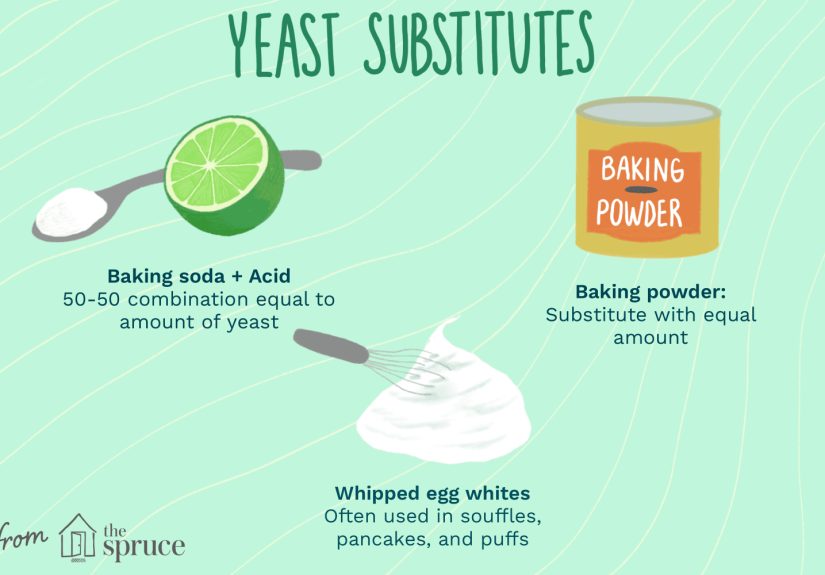
If you want the easiest path to a risen baked good, baking powder is the MVP. It already contains both a base and acid, so it can create carbon dioxide on its own when mixed with liquid. Double-acting baking powder is especially useful because it reacts once when mixed and again when heated in the oven. Translation: it gives your batter or dough two chances to puff up and look impressive.
Baking powder works best in quick breads, biscuits, scones, pancakes, waffles, muffins, and some rustic no-yeast loaves. It is also what makes many emergency breads possible, including beer bread and simple pantry loaves. These bakes tend to have a tender crumb rather than the stretchy chew of yeast bread, but they can still be deeply satisfying.
Use baking powder when you want reliable lift without adding another acidic ingredient. It is especially handy for batters and soft doughs that go from bowl to oven fast. That speed matters, because chemical leaveners are at their best when you mix, portion, and bake without leaving the dough lounging on the counter like it pays rent.
2. Baking Soda Plus Acid: Best for Soda Bread and Tangy Bakes
Baking soda is powerful, but it needs a dance partner. On its own, it will not do much besides sit there and look chalky. Pair it with an acid such as buttermilk, yogurt, sour cream, vinegar, lemon juice, molasses, or even certain fruit purees, and it starts producing carbon dioxide almost immediately.
This is why Irish soda bread works. The acid in buttermilk reacts with the baking soda, giving the dough lift without yeast. The result is not a lofty artisan loaf, but a hearty, tender bread with a crisp crust and a pleasantly rustic crumb. The same principle works in muffins, cakes, quick loaves, and some biscuits.
The catch is timing. Because baking soda begins reacting as soon as it meets acid and moisture, you do not want to mix the batter and then wander off to answer emails, reorganize the spice drawer, and rethink your life. Get it into the oven promptly or you will lose some of that precious lift.
3. Self-Rising Flour: The Pantry Shortcut
Self-rising flour is basically the overachiever of the flour world. It already contains baking powder and salt, which makes it a convenient stand-in when you need a quick, no-yeast bake. It is especially useful for biscuits, drop biscuits, pancakes, muffins, cobbler toppings, and simple beer breads.
If you have self-rising flour, you can often pivot into a no-yeast recipe with very little drama. That is why it shows up so often in emergency bread recipes. Instead of building lift from scratch, the flour arrives pre-loaded and ready to work.
Just remember that self-rising flour is not all-purpose flour in disguise. Because it already includes leavening and salt, you need to adjust the rest of the recipe accordingly. Add extra baking powder without thinking, and you may end up with a strange metallic or bitter note. Add full salt as written, and your biscuits might taste like they trained for a sodium marathon.
4. Whipped Egg Whites: Great for Airy, Delicate Bakes
Whipped egg whites are a mechanical leavener, meaning they trap air instead of relying on a chemical reaction or fermentation. They are not the right answer for every bake, but when used well, they can create gorgeous lift in sponge cakes, chiffon cakes, soufflé-style batters, and extra-fluffy pancakes.
The idea is simple: when egg whites are beaten, they hold tiny air bubbles. As the batter bakes, those bubbles expand and help the structure rise. This method is terrific for lighter, more delicate textures, but it does require a gentle touch. Fold too aggressively, and all that beautiful air disappears faster than cookies at a holiday party.
Whipped egg whites can support certain quick bakes when you are low on other leaveners, but they are not a practical substitute for yeast in a chewy bread loaf. Think “cloud-like cake” rather than “sliceable sandwich bread.”
5. Steam Leavening: The Secret Behind Popovers and Choux
Steam is the sleeper hit of the leavening world. It does not get the branding power of yeast or baking powder, but it can create dramatic rise in the right recipe. Popovers, cream puffs, and pâte à choux rely heavily on moisture turning to steam in a hot oven. That rapid expansion pushes the dough upward and creates hollow or airy interiors.
This method is brilliant for specific bakes and useless for others. You are not going to make a steam-leavened sandwich loaf and revolutionize lunch. But if your goal is a puffed pastry shell, popover, or gougère-style bite, steam does the job beautifully.
In other words, steam is not a yeast substitute for bread in the broad sense. It is a specialized leavening strategy that works best when the recipe is built around it from the start.
6. Sourdough Starter: A Substitute for Commercial Yeast, Not for Yeast Itself
This one needs a label, because it is often misunderstood. Sourdough starter can replace commercial yeast in some bread recipes, but it is not yeast-free. A starter contains wild yeast and bacteria, so it is an alternative to store-bought yeast, not an escape hatch from yeast altogether.
If you are out of active dry or instant yeast but already keep a healthy starter, you may be able to use it in place of commercial yeast. Expect longer rise times and a different flavor profile. The payoff is complexity, chew, and that tangy character sourdough fans like to act very normal about while naming their starters things like “Doughlene.”
If your goal is truly baking without yeast, skip this option. If your goal is simply baking without commercial yeast, it is a strong choice.
What Works Best for Different Baked Goods
Biscuits and Scones
Go with baking powder or self-rising flour. These baked goods are supposed to be tender and quick, so chemical leaveners fit naturally. Cold fat, minimal mixing, and a hot oven matter just as much as the leavener.
Muffins, Pancakes, and Quick Breads
Baking powder is the usual winner, though baking soda may join the party if the recipe includes buttermilk, yogurt, brown sugar, or fruit. Banana bread, zucchini bread, blueberry muffins, and pancakes are all classic no-yeast territory.
Irish Soda Bread and Similar Rustic Loaves
Baking soda plus buttermilk is the classic move. You will get a hearty loaf with character, but not the stretchy crumb of a yeast-raised country bread. That is not a flaw. It is the whole point.
Popovers, Cream Puffs, and Choux
Let steam do the heavy lifting. Follow the recipe carefully, preheat thoroughly, and resist opening the oven too early unless you enjoy watching beautiful rise collapse in real time.
Pizza Crust, Sandwich Bread, and Dinner Rolls
This is where expectations need managing. You can make no-yeast versions using baking powder, yogurt-based doughs, or quick-bread methods, but they will not behave exactly like traditional yeast dough. They can still be tasty, just different. Think “weeknight solution” rather than “Neapolitan masterpiece.”
Tips for Better Results Without Yeast
Choose the right recipe instead of forcing a swap. If a recipe is built for yeast, replacing it blindly can lead to dense texture and disappointing flavor. A proper no-yeast recipe will balance liquid, flour, fat, and leavening more intelligently.
Bake promptly when using baking soda. Once soda meets acid, the reaction begins. Waiting too long can cost you rise.
Do not overmix quick breads. Overmixing develops gluten and can make muffins, biscuits, and soda bread tough. Lumpy batter is often a good sign, not a cry for help.
Mind the flavor difference. Chemical leaveners can lift dough, but they do not create fermented flavor. If you miss that depth, add flavorful ingredients such as cheese, herbs, honey, malt, whole grains, or buttermilk.
Watch your salt and leavening levels. This matters especially with self-rising flour. It already contains both, so do not double up by accident.
Know that texture will change. No-yeast breads are often more cake-like, biscuit-like, or tender than chewy. That is normal. The goal is not to impersonate yeast perfectly. The goal is to make something good on its own terms.
Common Mistakes That Lead to Dense No-Yeast Bakes
One common mistake is using expired baking powder or baking soda. If your leavener is old enough to have opinions about landlines, replace it. Fresh leavening matters.
Another mistake is adding baking soda without enough acid. That can leave a soapy or bitter taste and weak rise. On the flip side, using too much baking powder can create an odd flavor and coarse texture. More is not always merrier.
Temperature also matters. Popovers and biscuits depend on a properly heated oven for lift. A lazy preheat can flatten your results before the batter even has a chance to dream.
Finally, many bakers expect a no-yeast loaf to look and taste exactly like a classic yeast bread. That expectation is the setup for disappointment. A good soda bread is not a failed baguette. A biscuit is not a lazy dinner roll. Judge the bake for what it is, and life becomes much tastier.
Real-World Baking Experiences With Yeast Substitutes
If you bake often enough, running out of yeast eventually becomes less of a crisis and more of a weird little kitchen rite of passage. The first time it happens, most people respond with optimism, followed by improvisation, followed by a loaf that could double as a paperweight. The second time, you get smarter.
One of the most common experiences is discovering that baking powder feels almost suspiciously easy. You mix the dry ingredients, stir in the wet, shape or pour, and bake. No kneading. No proofing. No wondering whether your dough is “slightly tacky” or whether the recipe author and you have very different definitions of “slightly.” Biscuits and muffins become the confidence builders of the no-yeast world. They rise fast, brown nicely, and deliver nearly instant emotional rewards.
Soda bread tends to be the next big revelation. It feels rustic and old-school in the best way. You mix flour, salt, baking soda, and buttermilk, shape the dough, slash the top, and bake. The loaf comes out craggy and charming, like it belongs on a wooden board next to soup and a very sincere chunk of butter. People expecting fluffy sandwich bread may be surprised by the denser crumb, but once you treat it like its own thing, it starts to make perfect sense.
Then there is the self-rising flour experience, which usually begins with skepticism and ends with someone saying, “Wait, that’s it?” It is especially useful for emergency biscuits, cobblers, and beer bread. Beer bread, in particular, has a way of making a pantry look far more prepared than it really is. You stir together self-rising flour and beer, slide it into the oven, and suddenly the kitchen smells like you planned this all along.
Whipped egg whites are a different adventure. They can feel magical when they work and mildly heartbreaking when they do not. Fold them carefully and you get airy pancakes or a delicate sponge. Stir them like you are mixing concrete, and the volume vanishes. These recipes teach patience and restraint, which is lovely and all, but also inconvenient when breakfast is involved.
Steam-leavened bakes create their own category of thrill. Popovers and cream puffs puff dramatically enough to make you feel like a kitchen wizard. Of course, they also humble you quickly if the oven is not hot enough or if you open the door too soon. The lesson there is simple: trust the heat, trust the process, and stop peeking.
Over time, the biggest shift is mental. You stop asking, “How do I make this exact yeast bread without yeast?” and start asking, “What can I make that will be excellent on its own?” That question leads to better baking. Instead of chasing a perfect imitation, you learn to play to each leavener’s strengths. Baking powder gives speed. Baking soda gives rustic charm. Egg whites give lightness. Steam gives drama. And your empty yeast jar gives you a surprisingly good reason to branch out.
So yes, baked goods can absolutely rise without yeast. They just rise by different rules. Once you understand those rules, running out of yeast feels a lot less like disaster and a lot more like a detour with really good snacks.
Conclusion
The best yeast substitute depends on what you are baking. For biscuits, muffins, pancakes, and quick loaves, baking powder is usually the most dependable choice. For soda bread and other tangy bakes, baking soda plus acid works beautifully. Self-rising flour is the fast-track pantry helper. Whipped egg whites and steam can create excellent lift in specialized recipes. And sourdough starter can replace commercial yeast, though it is not truly yeast-free.
The biggest secret is not trying to force every recipe into becoming something it was never meant to be. Choose a method that suits the bake, work quickly when the chemistry calls for it, and adjust your expectations from “identical to yeast bread” to “delicious in a different way.” That is how you turn an empty yeast jar into a very decent excuse for fresh biscuits.