Table of Contents >> Show >> Hide
Pet crabs are tiny armored roommates with big personalities. They climb, dig, wave, hide, molt, redecorate their homes without permission, and sometimes stare at you like you owe them rent. But while they can be fascinating pets, crabs are not “set it and forget it” animals. A plastic box, a sponge, and a pinch of mystery pellets will not cut it. Pet crabs need the right habitat, carefully managed water, a varied diet, and a calm environment where they can molt safely.
This guide focuses mainly on the most common pet crabs: land hermit crabs and semi-aquatic crabs such as fiddler crabs, red-claw crabs, and similar aquarium species. The exact setup depends on the species, so the first rule of crab care is simple: know what kind of crab you have. A hermit crab needs warm, humid air and deep diggable substrate. A fiddler crab needs a brackish shoreline-style tank with both water and land. A fully aquatic crab needs stable aquarium water. Put the wrong crab in the wrong home and you are not “improvising”; you are creating a tiny crustacean disaster movie.
The good news? Once you understand the basics, looking after pet crabs becomes much easier. Think of crab care as three main jobs: build the right habitat, feed and hydrate properly, and protect your crab’s health through smart daily maintenance. Do those three things well, and your pet crab has a much better chance of staying active, curious, and wonderfully weird.
Way 1: Build the Right Habitat
The habitat is the foundation of pet crab care. Crabs are sensitive to temperature, humidity, water quality, and stress. A poor enclosure can cause dehydration, failed molts, shell fights, lethargy, and early death. A good enclosure, on the other hand, lets your crab behave like a crab: digging, climbing, soaking, hiding, exploring, and occasionally rearranging everything you carefully placed.
Choose the correct enclosure size
For land hermit crabs, a glass aquarium or terrarium is usually best because it holds heat and humidity better than an open wire cage. A very small temporary habitat may work for transport, but it should not be a permanent home. As a practical starting point, a 10-gallon tank is often considered the bare minimum for a small number of small hermit crabs, but bigger is better. Adult hermit crabs need room to roam, climb, dig, and avoid each other when they want privacy. Crabs may look slow during the day, but at night they can become surprisingly busy little bulldozers.
For fiddler crabs and other semi-aquatic species, use an aquarium with a secure lid. These crabs are escape artists with legs. The setup should include both a water area and a land area, often called a paludarium-style setup. A simple glass tank with a sloped sand section, rocks, driftwood, and shallow brackish water can work well when properly maintained. Never keep semi-aquatic brackish crabs in a fully freshwater fish tank just because the pet store label said “freshwater crab.” Many species sold under that label need at least mildly brackish conditions and access to air.
Control temperature and humidity
Most land hermit crabs are tropical animals. They generally need warm, humid air to breathe properly because their modified gills must stay moist. A healthy crabitat often sits around the mid-70s to mid-80s Fahrenheit, with relative humidity commonly kept around 70% or higher. Use a reliable thermometer and hygrometer; guessing is not a care plan. Your hand is not a calibrated scientific instrument, even if you are very confident.
An under-tank heater placed on the side or back of the tank can help warm the air without baking the substrate. Avoid intense heat lamps that dry the enclosure too quickly. Dry air is dangerous for hermit crabs. If humidity drops, mist with dechlorinated water, adjust the lid coverage, add damp moss, or improve the water pools. The goal is stable humidity, not a rainforest thunderstorm every five minutes.
Semi-aquatic crabs also need stable temperatures, though the ideal range varies by species. Aquarium heaters may be needed for tropical aquatic setups, and a thermometer should always be used. Sudden temperature swings are stressful, especially during molting.
Use deep, safe substrate
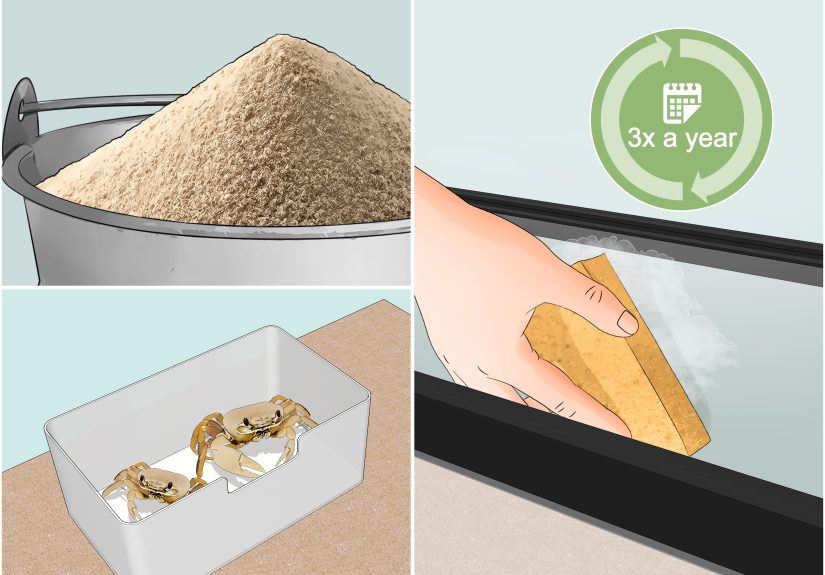
Substrate is not decoration; it is life support. Land hermit crabs bury themselves to molt, rest, and regulate moisture. A shallow layer of colorful gravel is one of the classic beginner mistakes. Hermit crabs need substrate deep enough to completely bury themselves. Many experienced keepers recommend at least six inches, or three times the height of the largest crab, whichever is deeper. For larger adults, this can mean a very deep layer.
A popular substrate blend is play sand mixed with coconut fiber. The texture should hold a tunnel without collapsing, similar to sandcastle sand: moist enough to shape, not swampy. If water pools at the bottom or the substrate smells sour, it is too wet or dirty. If it crumbles like dry beach sand, it is too dry. Your crab should be able to dig safely without turning its molting chamber into a cave-in scene.
For fiddler crabs and red-claw crabs, create a shoreline effect. They need damp sand or a stable land section where they can leave the water. Smooth rocks, cork bark, aquarium-safe wood, and ramps can help them climb in and out. Make sure all structures are secure. Crabs climb like tiny parkour athletes but fall like pebbles.
Provide hiding places, climbing areas, and shells
Crabs are prey animals by nature, so hiding spots reduce stress. Add cork bark, coconut huts, caves, driftwood, fake plants, leaf litter, and climbing branches. Hermit crabs especially enjoy vertical space. They may be called hermits, but many are social and active when given a rich environment.
For hermit crabs, extra shells are essential. A hermit crab does not grow its own shell; it moves into empty shells as it grows. Provide several natural, appropriately sized shells for each crab, with openings that match the species’ preference. Shell competition can become serious if choices are limited. Painted shells should be avoided because paint can chip, trap the crab, or introduce unsafe materials. Natural shells may not look like tiny party hats, but your crab cares more about safety than fashion week.
Way 2: Feed and Hydrate Pet Crabs Properly
Crabs are opportunistic omnivores, which means they eat a little bit of many things. In the wild, they may nibble plant matter, algae, fruit, decaying wood, small animals, leaf litter, and mineral-rich materials. In captivity, variety is the key. A crab forced to live only on one commercial pellet is like a person eating plain crackers forever. Technically food, emotionally questionable.
Offer a varied, balanced diet
For hermit crabs, use a high-quality commercial hermit crab food as a base only if it has safe ingredients, then supplement with fresh foods. Good options may include small pieces of unsalted cooked egg, fish, shrimp, plain chicken, leafy greens, carrots, sweet potato, apples, berries, coconut, oats, seaweed, and crushed eggshell or cuttlebone for calcium. Avoid salty, seasoned, sugary, fried, or processed foods. If it came from a neon snack bag and leaves orange dust on your fingers, your crab does not need it.
Calcium is especially important for exoskeleton strength and molting. Cuttlebone, crushed oyster shell, clean eggshell powder, and calcium-rich foods can help. Protein also matters because molting and growth are demanding. Rotate foods rather than serving the same menu every day.
For fiddler crabs and other semi-aquatic crabs, offer sinking pellets, algae wafers, frozen or freeze-dried foods, seaweed, blanched vegetables, and occasional protein foods such as brine shrimp or bloodworms, depending on the species. Remove uneaten food before it fouls the water. Aquatic crab tanks can turn nasty fast when leftovers decay.
Provide the right water
Water care is where many new crab owners accidentally go wrong. Land hermit crabs need access to both fresh water and saltwater. Both should be dechlorinated. The saltwater should be made with marine-grade aquarium salt, not table salt. Table salt does not provide the right mineral balance and may contain additives. The dishes should be deep enough for crabs to soak and refill shell water, but they also need safe ramps, stones, or mesh so they can climb out easily.
Do not rely on a wet sponge as the main water source. Sponges can harbor bacteria and do not replace proper water pools. If you use a sponge temporarily, clean and replace it frequently, but a better setup is two safe soaking dishes: one freshwater and one marine saltwater.
For fiddler crabs, brackish water is usually required. Brackish water is a mix between freshwater and saltwater, similar to what occurs in estuaries and coastal marshes. Use a water conditioner to remove chlorine and chloramine, and use marine aquarium salt to create the correct salinity for the species. A hydrometer or refractometer helps you measure salinity instead of guessing. “Looks salty” is not a measurement.
Keep food and water clean
Crabs may drag food into hiding places like suspicious little grocery thieves. Check the enclosure daily for spoiled food. Fresh produce should usually be removed within a few hours or by the next morning. Water dishes should be cleaned and refilled regularly. In warm, humid crab habitats, mold and bacteria can grow quickly.
In aquatic or semi-aquatic setups, test water quality. Ammonia and nitrite should stay at zero in a cycled aquarium. Nitrate should be controlled through water changes and filtration. Copper is dangerous to many invertebrates, so avoid medications, decorations, or water treatments containing copper unless specifically approved for invertebrates. A filter helps, but it does not replace maintenance. Filters are helpers, not magical trash portals.
Way 3: Protect Health, Molting, and Daily Well-Being
Crab health is often about prevention. By the time a crab looks obviously sick, the problem may already be advanced. The best approach is to keep the environment stable, reduce stress, watch behavior, and understand molting.
Understand molting
Molting is the process where a crab sheds its old exoskeleton and grows a new one. It is normal, but it is also vulnerable. Hermit crabs often bury themselves for days, weeks, or even longer during a molt. During that time, do not dig them up unless there is a true emergency. Disturbing a molting crab can cause serious harm. A buried crab is not automatically dead, missing, or plotting against you from below the substrate.
Signs that a hermit crab may be preparing to molt include increased digging, duller color, reduced activity, changes in eating, and spending more time near water. Provide deep substrate, correct humidity, protein, calcium, and peace. Other crabs may bother a surface-molting crab, so isolation may be needed if a crab molts above ground, but the best prevention is a habitat that allows safe underground molting.
Fiddler crabs and aquatic crabs also molt. After molting, they may hide while the new exoskeleton hardens. Do not remove a shed exoskeleton immediately unless it is clearly fouling the water; many crabs eat the molt to recover minerals. It may look alarming at first, but sometimes the “dead crab” is just an empty shell costume on the tank floor.
Handle less, observe more
Crabs are best enjoyed as observation pets. Frequent handling can stress them, dry them out, or lead to falls. Hermit crabs can pinch hard, and fiddler crabs may pinch when frightened. If you must move a crab, keep handling short, support the crab carefully, and stay close to a soft surface. Never pull a hermit crab from its shell. That can injure or kill it.
Wash your hands before and after enclosure care, especially after touching tank water, substrate, food bowls, or decorations. Good hygiene protects both you and the animals. Do not clean crab supplies in kitchen sinks where food is prepared. Use dedicated tools and rinse items well.
Watch for warning signs
A healthy crab may be shy, especially during the day, but it should still show normal activity over time. Watch for unusual lethargy, foul odor, repeated shell evacuation, missing limbs not related to a known molt, inability to climb, mold growth on the body, refusal to eat for long periods, or aggressive shell fighting. Check temperature, humidity, salinity, substrate condition, and water quality first because environmental problems are common causes of trouble.
If you notice serious symptoms, contact an exotic-pet veterinarian or an experienced invertebrate specialist. Not every vet treats crabs, so it is smart to locate one before an emergency. A good crab owner prepares early; a panicked crab owner Googles at midnight while the crab judges from under a log.
Never release pet crabs outdoors
If you can no longer care for your pet crab, do not release it into the wild. Released pets may die from unsuitable conditions, or they may harm local ecosystems if they survive. Instead, contact a responsible rescue, local aquarium group, exotic-pet community, school program, or pet store that can help with rehoming. Responsible ownership includes a plan for the animal’s whole life, not just the fun shopping-cart part.
Extra Experience: What Real Crab Care Teaches You Over Time
After keeping or helping care for pet crabs, one lesson becomes obvious: the enclosure matters more than the crab itself at first. Many beginners focus on choosing the cutest crab, the prettiest shell, or the funniest name. Those are fun details, but the real success comes from building a stable environment before the crab moves in. A well-prepared tank is like a good hotel: temperature right, humidity right, food available, water clean, exits clearly marked. A poorly prepared tank is like a roadside motel with no roof and a mystery smell.
One practical experience is that gauges are worth buying immediately. A thermometer and hygrometer are not optional accessories for hermit crabs; they are daily tools. Many new keepers think the tank is humid because the glass looks slightly foggy, only to discover the humidity is too low in the areas where the crabs actually spend time. Place gauges where they measure the living zone, not just the lid. For aquatic crabs, water test kits are just as important. A tank can look clean while ammonia is quietly causing harm.
Another useful lesson is to avoid over-cleaning. That sounds strange because cleanliness matters, but crabs rely on stable conditions. For hermit crabs, constantly digging through the substrate or rearranging the habitat can interrupt molting and increase stress. Spot-clean food scraps, refresh water, wipe dirty surfaces, and monitor for odor, but do not treat the tank like a weekly construction site. If a crab has buried itself, assume it needs privacy. The hardest part of crab care is often doing nothing at the right time.
Shell shopping also becomes more important than expected. Hermit crabs can be picky. A shell that looks perfect to you may be rejected like a bad apartment listing. Offer multiple natural shells with different sizes and similar opening shapes. Boil and cool shells before adding them, unless the shell supplier gives different safe preparation instructions. Place shells in a shell shop area and let the crabs choose. When a crab changes shells, do not celebrate by grabbing it for photos. Give it time to settle into its new mobile home.
Feeding becomes easier when you think in categories instead of recipes. Offer protein, plant matter, calcium, and occasional treats. A tiny bit of cooked egg, a sliver of carrot, a pinch of seaweed, and crushed eggshell can make a more useful meal than a bowl of the same pellets every night. For aquatic crabs, variety also prevents boredom and supports nutrition, but every food choice must respect water quality. Feed small amounts. A crab does not need a banquet the size of its body unless you enjoy cleaning cloudy water.
Finally, crab care teaches patience. Crabs are not dogs in helmets. They will not perform tricks on command or greet you at the door with emotional speeches. Their charm is quieter: a tiny claw appearing from a cave, a midnight climbing session, a careful shell inspection, a fiddler crab waving like it is directing airport traffic. When you provide the right habitat and stop expecting them to act like traditional pets, crabs become fascinating animals to observe. The reward is not cuddling; the reward is seeing natural behavior because you built a world where it can happen.
Conclusion: Small Crabs, Big Care Standards
Looking after pet crabs is not difficult once you understand what they need, but it does require consistency. Build a habitat that matches the species, maintain safe water and humidity, feed a varied diet, and respect molting. These three core habits can prevent many common problems and help your crab live a healthier, more natural life in captivity.
Whether you keep land hermit crabs in a warm crabitat or fiddler crabs in a brackish shoreline tank, remember that crabs are living animals with specific environmental needs. They are not decorations, novelty gifts, or tiny toys in borrowed shells. Give them space, safety, moisture, minerals, and peace, and they will reward you with one of the strangest and most entertaining pet-keeping experiences around.
Note: This article is for educational pet-care guidance and does not replace advice from a qualified exotic-pet veterinarian. Always identify your crab species before setting up its habitat, and never release unwanted pet crabs into the wild.